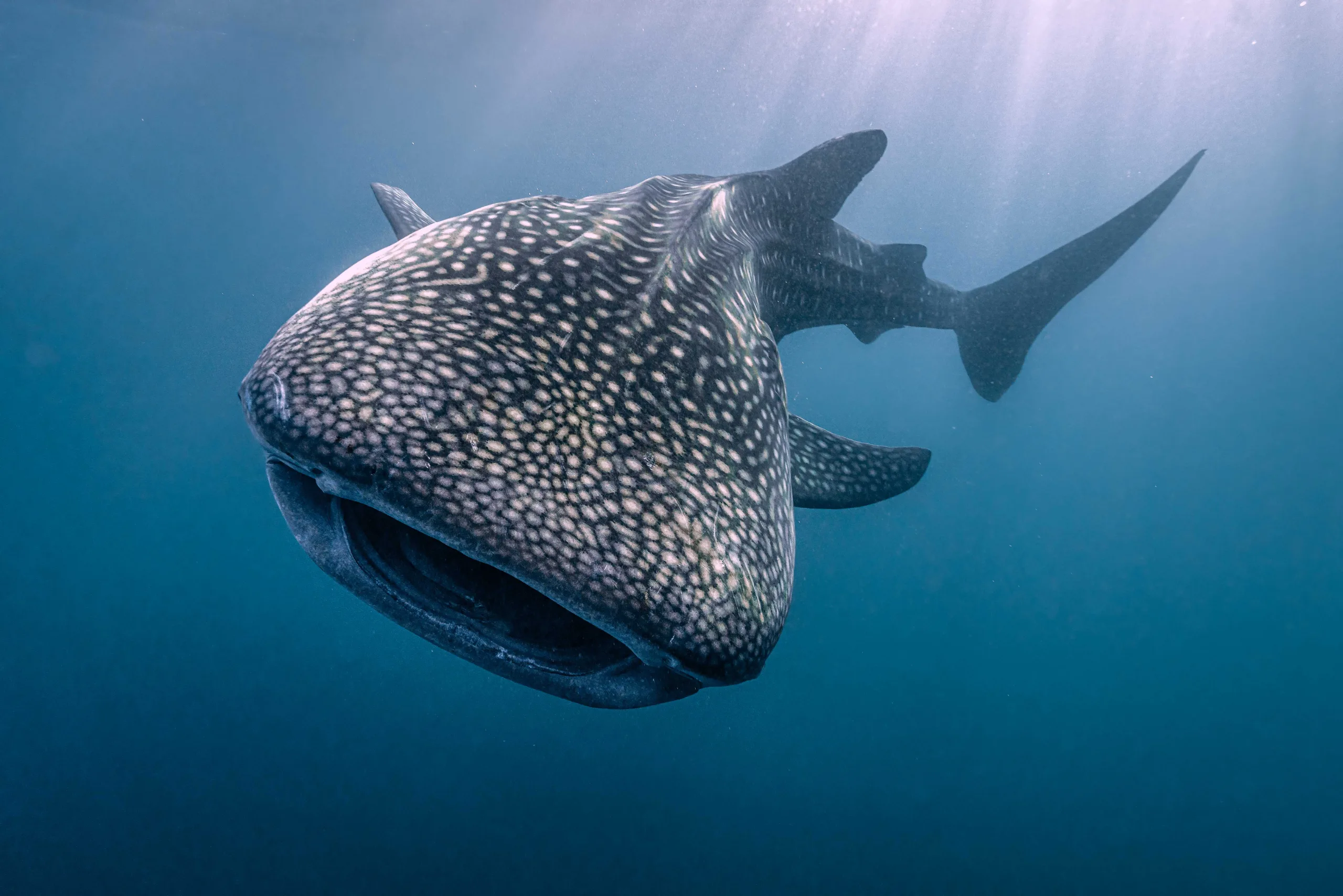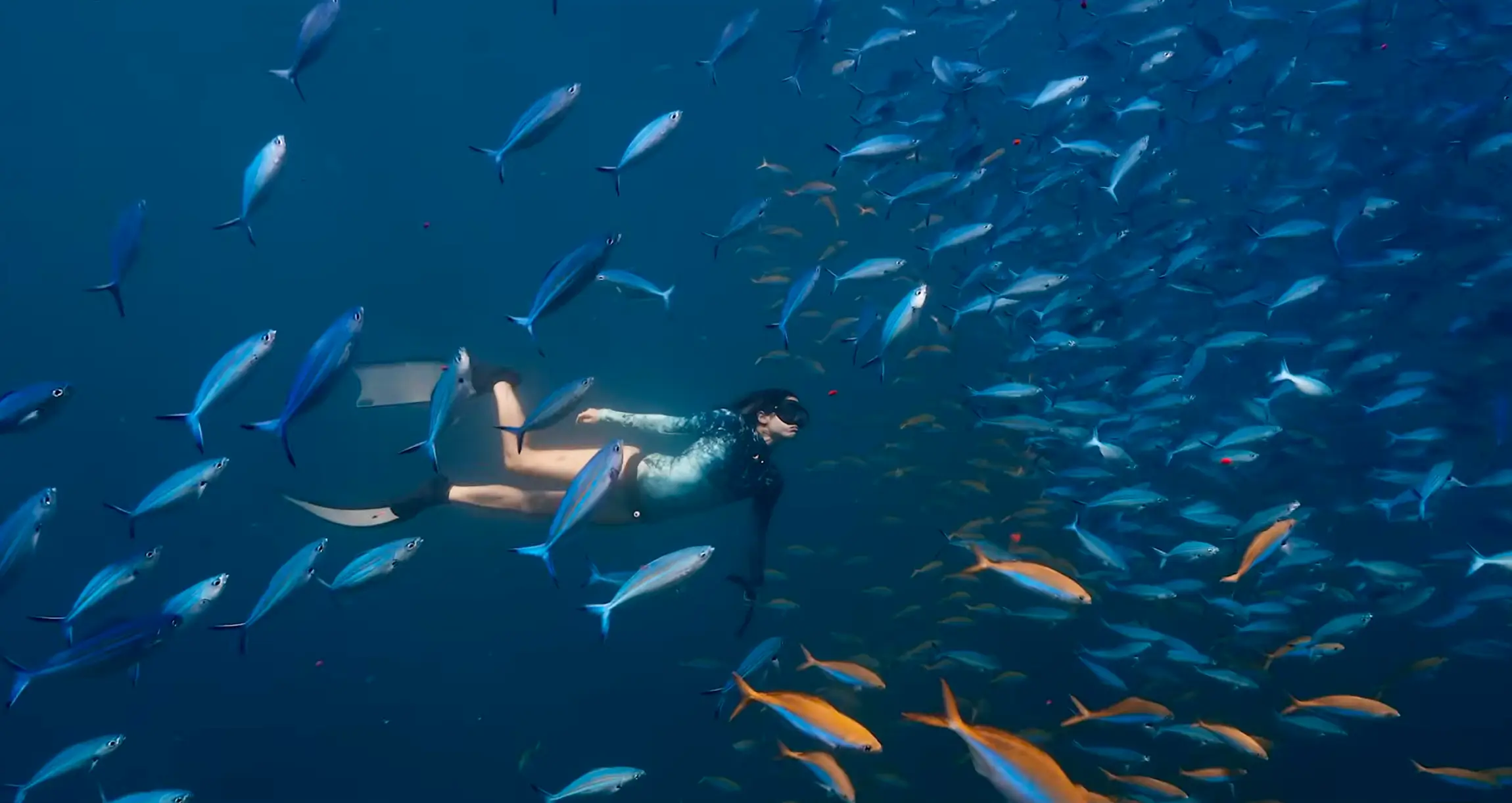
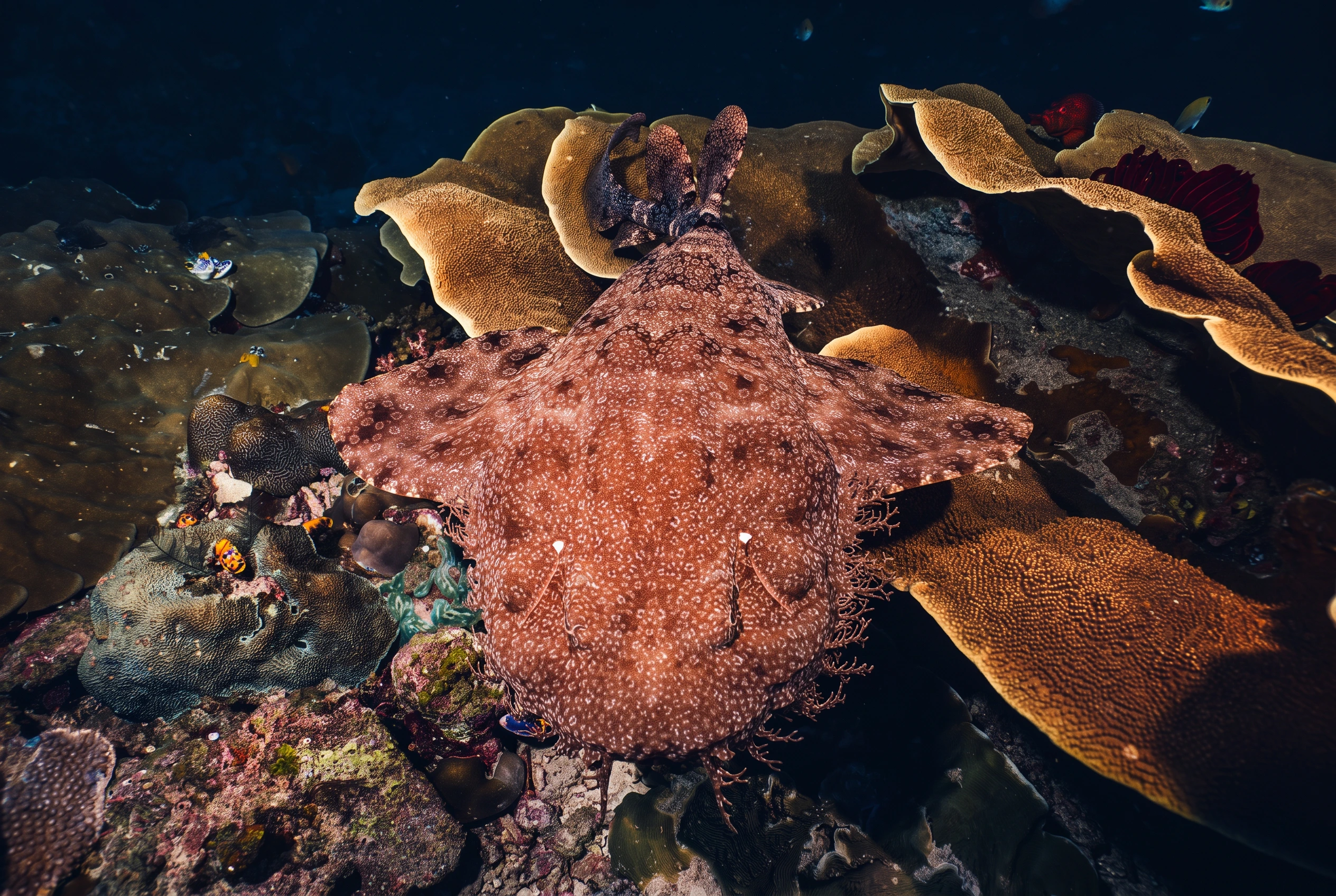
For many divers, Raja Ampat is the trip they have been planning for years. The reef system here supports more coral and fish species than almost anywhere else on the planet, not as an isolated patch but across a connected network of reefs, walls, and seamounts that stretches for hundreds of kilometers.
If diving in Raja Ampat is on your list, this guide is a good place to start, covering a curated breakdown of the region’s best dive sites.
Read on to help you envision your journey through this wonderful region!
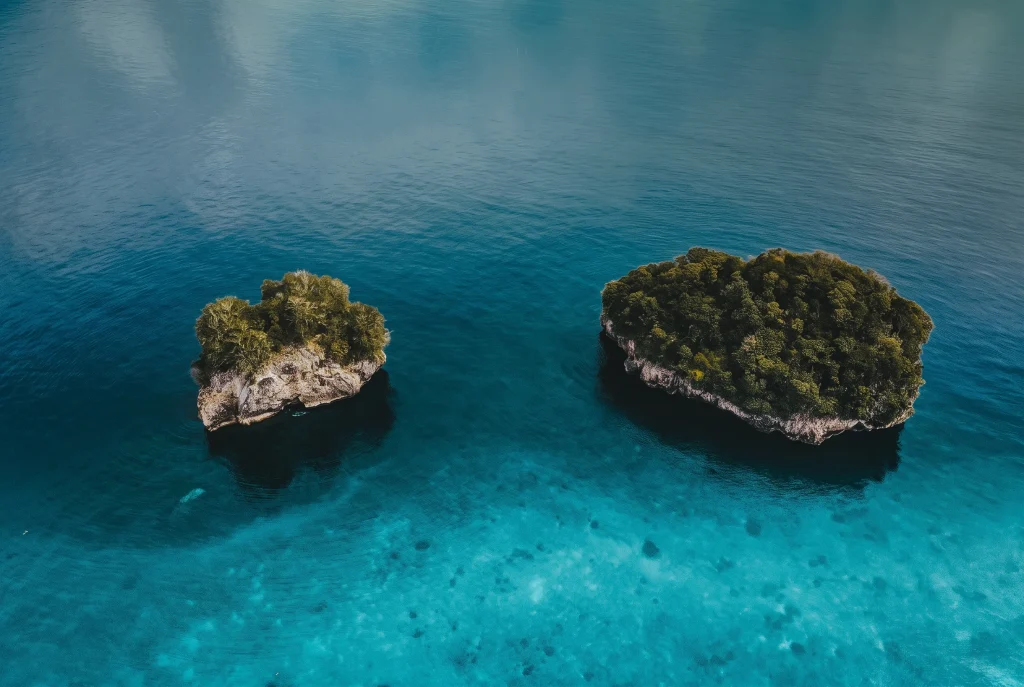
10 Best Dive Sites in Raja Ampat
Below are the best dive spots in Raja Ampat, which will give you a real taste of what makes this region one of the most beautiful destinations you’ll ever visit.
1. Blue Magic
Quick facts:
- Location: Dampier Strait
- Experience Level: Advanced
- Highlights: Oceanic manta rays, grey reef sharks, large schooling pelagics
A pinnacle reef rising from 30 to 8 meters, Blue Magic sits exposed in the Dampier Strait and draws a reliable mix of pelagic species. Oceanic manta rays (Mobula birostris) come in to be cleaned on the deeper ridges, moving slowly enough that you can hold position and watch. 1
Around them, dense schools of barracuda, Spanish mackerel, and giant trevally sweep the water column, with grey reef sharks working the edges. The entry is negative, and the current can be demanding, but Blue Magic consistently delivers the kind of dive that stays with you. 2
2. Melissa’s Garden
Quick facts:
- Location: Penemu
- Experience Level: All Levels
- Highlights: Dense hard coral formations, schooling reef fish, nudibranchs, and macro life
Melissa’s Garden sits in the shallows between two pinnacles, where a sloping reef plateau is covered in hard coral formations and dense concentrations of reef fish. Anthias move through the structure in large numbers, and the site holds strong macro life in the coral and soft coral-covered rock formations along the slope. 3
Turtles and schools of barracuda are regular sightings. The calm, shallow conditions make it accessible to divers at most experience levels, and the reef health here is consistently noted as among the best in the region. 4
3. Magic Mountain
Quick facts:
- Location: Misool
- Experience Level: Intermediate
- Highlights: Oceanic and reef manta rays, grey reef sharks, schooling pelagics
Also known as Shadow Reef, Magic Mountain is a submerged ridge in Misool that drops to over 40 meters, with cleaning stations at multiple depths drawing both giant oceanic manta rays (Mobula birostris) and reef manta rays (Mobula alfredi) year-round. 5 6
Schools of bigeye trevally, barracuda and striped snapper move through the current along the ridge, while grey reef and whitetip sharks patrol the deeper sections. The site’s combination of reliable manta activity and varied topography makes it one of the more consistently rewarding dives in the region. 7
4. Four Kings
Quick facts:
- Location: Misool
- Experience Level: All Levels
- Highlights: Soft coral pinnacles, oceanic manta rays, schooling barracuda and trevally
Four pinnacles rising from around 30 meters to within a few meters of the surface, three of them connected by a ridge that creates an unusually varied topography for a single dive. The tops are blanketed in soft corals, and the vertical relief pulls in a steady mix of life at every depth. 8 9
Schools of barracuda and trevally work the water column, turtles graze along the shallower sections, and oceanic manta rays move through when conditions draw them in. It is the kind of site where you can spend the whole dive on the pinnacle tops and still feel like you missed something. 8 9
5. Boo Windows
Quick facts:
- Location: Misool
- Experience Level: All Levels
- Highlights: Natural swim-throughs, soft coral formations, schooling fish
From the surface, Boo looks like two separate rocks. Underwater, a pair of large swim-throughs connect them, with natural openings at each end that flood the passage with daylight and give the site its name. The walls inside are covered in soft corals, and schools of fish move through the structure as you pass through. 8 10
The reef outside slopes gently from 5 to 10 meters before dropping to around 30 meters, with wobbegong sharks occasionally resting along the deeper sections. Wide-angle photographers tend to do well here, particularly shooting back toward the windows with the light coming through. 8 10
6. Nudi Rock
Quick facts:
- Location: Misool
- Experience Level: All Levels
- Highlights: Nudibranchs and macro life, pygmy seahorses, reef sharks, and pelagics in the blue
Nudi Rock is a small island in the Fiabacet chain. Its name comes from the shape of the rock above the water, which resembles a nudibranch, with the trees on top creating a frilly outline.
Below the surface, soft coral-covered shallows are home to porcelain crabs, pygmy seahorses, arrowhead shrimp, and a wide variety of nudibranch species, making it a strong site for macro photographers. 11 12 Venture deeper and the picture shifts, with barracuda, blacktip, whitetip, and grey reef sharks all moving through the water around the site. 11 12
7. Batu Rufus
Quick facts:
- Location: Penemu
- Experience Level: All Levels
- Highlights: Wall, swim-through, coral garden, Napoleon wrasse, and schooling fish
Batu Rufus follows a natural sequence, with entry from the bay, a wall section, a swim-through at around 5 meters, and a coral garden to finish. The structure attracts a solid mix of reef life, with Napoleon wrasse, bumphead parrotfish, bluefin trevally, fusiliers, and seafans all regularly sighted. 13
Macro life, including pygmy seahorses and nudibranchs, appears in the coral sections, making it a site that works for both wide-angle and close-up photography. 13
8. Cape Kri
Quick facts:
- Location: Dampier Strait
- Experience Level: Advanced
- Highlights: Record reef fish diversity, large schooling pelagics, reef sharks and turtles
Cape Kri sits at the northeastern tip of Kri Island, where the Indonesian Throughflow pushes nutrient-rich currents around the reef and concentrates marine life in exceptional density. The site runs from shallow coral gardens down a sloping reef to around 30-40 meters, with hard corals, soft corals, and seafans across the structure. 14 15
Schools of barracuda, trevally, and snapper move through in large numbers, alongside reef sharks and turtles. Ichthyologist Dr Gerry Allen recorded 374 reef fish species on a single dive here, a figure that gives some indication of what the site holds on a good tide. 14 16
9. Citrus Ridge
Quick facts:
- Location: Yangeffo, Dampier Strait
- Experience Level: All Levels
- Highlights: Endemic yellow coral, wobbegong sharks, bumphead parrotfish, and macro life
Citrus Ridge takes its name from the yellow coral endemic to this site, which covers sections of a hard coral garden that slopes down through a channel to around 22 meters. Lionfish and scorpionfish rest on the table and brain corals in the shallows, while wobbegong sharks, nudibranchs, and eels occupy the reef structure lower down. 17 18
Schools of barracuda, fusiliers, and surgeonfish move through the water column, and bumphead parrotfish make occasional appearances along the slope. The accessible depth and generally calm conditions make it a site that works for divers at most experience levels. 19
10. The Passage
Quick facts:
- Location: Dampier Strait (between Gam Island and Waigeo Island)
- Experience Level: Intermediate
- Highlights: Narrow canyon topography, macro life, reef sharks, and current drift
The Passage runs through a narrow canyon between Gam and Waigeo islands, where the current can be strong enough to make the dive feel like drifting through a river. The walls are lined with sea fans, whip corals, and sponges, and the sheltered structure holds strong macro life throughout. 20 21
Pygmy seahorses, nudibranchs, flatworms, and eels tuck into crevices, while stingrays, turtles, groupers, and blacktip sharks appear in the deeper sections. It is a site where slowing down and looking closely pays off more than covering distance. 20 22
Pro Tip: Getting to These Dive Sites
The dive sites of the Dampier Strait are accessible from land-based resorts on Kri and nearby islands, but much of Raja Ampat requires more ground to cover. Misool and Penemu sit significantly further from Sorong, and reaching them without a liveaboard means long daily boat transfers that cut into dive time. A liveaboard itinerary solves this by moving overnight, putting you in position for each site at the right time of day and tide.
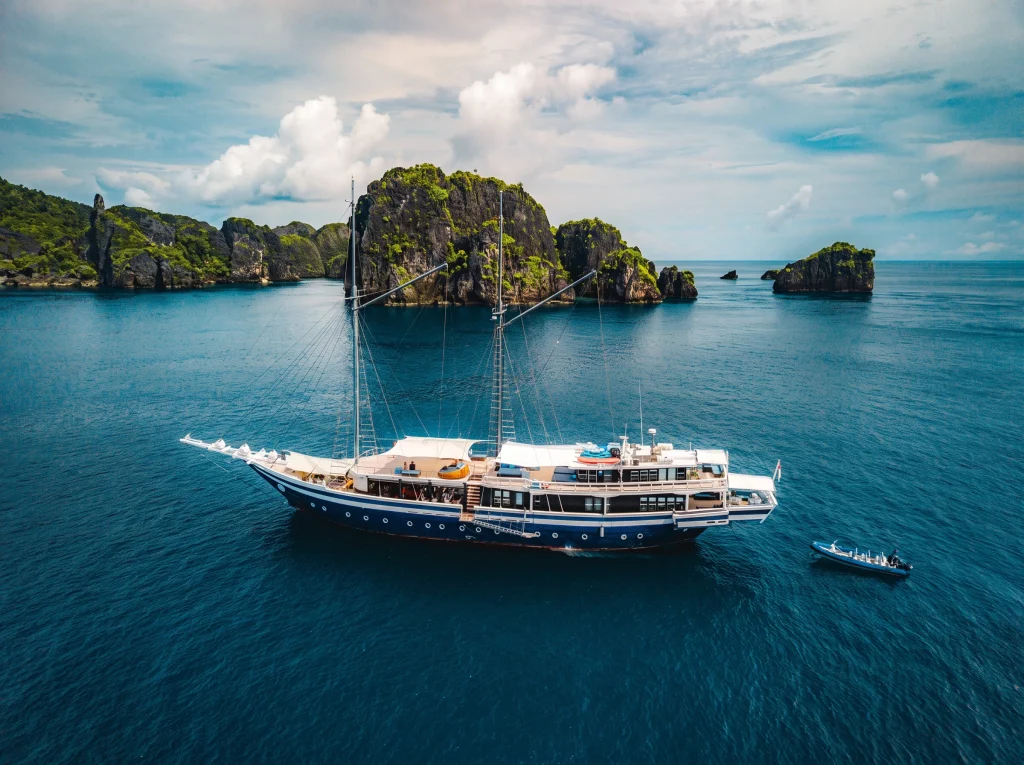
Scubaspa ZEN runs itineraries across the full breadth of the archipelago, covering Dampier Strait, Penemu and Misool within a single trip. For divers who want to see the range of what Raja Ampat offers without spending half the day in transit, it is the most practical way to do it.
Ready for Your Raja Ampat Dive Holiday?
Raja Ampat rewards divers who take the time to explore it properly. Scubaspa ZEN runs itineraries designed to move efficiently between regions, so you spend more time in the water and less time in transit.
Browse the Scubaspa ZEN Indonesia itineraries to see which route fits your schedule, or book your trip directly when you’re ready. Follow along on Instagram for a closer look at what’s waiting underwater.
Frequently Asked Questions
Which Raja Ampat dive sites are best for beginners?
While Raja Ampat is known for its currents, several sites are accessible to newer divers. Melissa’s Garden in Penemu offers a shallow coral plateau with generally mild conditions and strong reef life at every level. Boo Windows and Four Kings in Misool are also suitable for all experience levels, with calm enough conditions to explore the structure at a relaxed pace.
Where can I see manta rays in Raja Ampat?
Manta rays can be encountered at several sites across Raja Ampat, including Magic Mountain in Misool, as well as sites around the Dampier Strait such as Blue Magic, Arborek, and Manta Sandy. Magic Mountain is known for encounters with both giant oceanic manta rays (Mobula birostris) and reef manta rays (Mobula alfredi) at its cleaning stations.
Manta sightings around the Dampier Strait can be less predictable, as their movements and patterns appear to have changed in recent years. Sites such as Blue Magic, Arborek, and Manta Sandy can all offer opportunities to see mantas, but sightings depend on their movements and local conditions.
Which sites are known for macro photography?
Macro life can be spotted across Raja Ampat, with nudibranchs, pygmy seahorses, crustaceans, and other small reef creatures appearing at many dive sites. For particularly good macro opportunities, areas such as Batanta, Batu Rufus in Penemu, and the mangroves around Yangeffo are worth exploring.
Nudi Rock in the Fiabacet chain is also home to a variety of smaller marine life, including nudibranchs, pygmy seahorses, porcelain crabs, and arrowhead shrimp across its soft coral-covered shallows
Do I need to be an advanced diver for Misool sites?
It depends on the site. Four Kings, Boo Windows and Melissa’s Garden are suitable for all experience levels. Blue Magic and Cape Kri in the Dampier Strait require comfort with strong currents and negative entries, and are better suited to advanced divers. For Misool’s more exposed sites such as Magic Mountain, an Advanced Open Water certification and experience with drift diving is recommended.