Known for its vibrant coral atolls and rich marine life, a dive trip to the Maldives undoubtedly sits at the top of a lot of diver’s bucket list. Home to an extraordinary diversity of coral species, thousands of fish species, sharks, and rays, this region offers some of the best underwater experiences on Earth.
Thinking about the Maldives for your next diving vacation? You might be wondering if this island nation truly lives up to the hype. In this guide, we’ll take you through the Maldives’ most remarkable encounters. You’ll also find tips on the best places to go, when to visit, and how to dive responsibly.
At a Glance: Marine Life in the Maldives
The Maldives is home to over 1,100 fish species and 250 coral species across 26 atolls in the Indian Ocean. Divers can encounter manta rays, whale sharks, reef sharks, sea turtles, dolphins, and a wide range of macro life, including nudibranchs, frogfish, and ghost pipefish.
South Ari Atoll is one of the few places in the world where whale sharks are present year-round. Meanwhile, Hanifaru Bay in Baa Atoll is one of the largest documented manta ray aggregation sites in the world, drawing hundreds of rays during peak season.
Marine life in the Maldives is abundant throughout the year, and pelagic encounters can happen in every season. Rather than marine life changing drastically, what shifts with the monsoon seasons is mainly the currents, visibility, and plankton concentration, which influence where certain species are more commonly encountered.
The southwest monsoon (roughly May to November) tends to bring more plankton-rich water, which can increase sightings of manta rays and whale sharks in certain areas, while the northeast monsoon (December to April) generally offers calmer seas and clearer visibility. Overall, divers can expect healthy reefs, sharks, rays, and pelagic activity year-round across the atolls.
Why the Maldives is a Marine Biodiversity Hotspot
Encompassing roughly 3% of the world’s total reef area, the Maldives is home to a wide range of habitats, from lagoons and reef slopes to narrow channels.
As monsoonal currents push through the channels between atolls, the reef structures act as a barrier, forcing nutrient-rich water toward the surface. These seasonal currents are influenced by the Maldives’ shifting monsoon winds, which drive water flow through the atoll channels.
The currents draw in the larger open-water species that the Maldives is known for. An abundance of reef fish species have been recorded across these reefs, alongside coral formations that have been growing for millions of years.
Atolls, Reefs, and Cleaning Stations: Foundations of Life
The atolls of the Maldives each carry a fascinating geological story. Millions of years ago, they began as volcanic islands surrounded by thriving coral reefs. Over time, as the islands slowly sank beneath the ocean and sea levels rose, the coral continued to grow upward and outward, patiently building what we now recognize as the iconic rings of reef.
Eventually, the original islands disappeared below the surface, leaving behind the breathtaking atolls we see today: vibrant reefs encircling calm lagoons, shaped by nature over thousands of years.
NASA’s Earth Observatory describes atolls as some of the most complex and vibrant structures on the planet. The Maldives, with its intricate network of reefs and lagoons, is widely regarded as their archetype.
Each atoll contains a diverse range of habitats, such as sheltered lagoons that provide a calmer home to reef fish, submerged pinnacles (known as thila in Dhivehi or Maldivian, the official language of the Maldives) that rise from the depths, often housing cleaning stations for manta rays and other marine life.
The narrow channels cutting through the reef walls (called kandu in Dhivehi) funnel nutrient-rich currents that draw in sharks, rays, and other pelagic species. Each environment attracts different creatures, which is part of what makes diving in the Maldives so exhilarating.
Monsoon Currents and Seasonal Feeding Gatherings
Part of what makes the Maldives so rich in marine life is the constant movement of ocean currents flowing through the atolls, influenced by the seasonal monsoons. These currents carry nutrients, attract schools of fish, and create the dynamic underwater scenes that divers travel here to witness.
The southwest monsoon runs from mid-May through November. It stirs up nutrient-rich currents that trigger plankton blooms across the atolls. Manta rays gather in remarkable numbers during this period, particularly at sites like Hanifaru Bay in Baa Atoll in the North of the Maldives. Whale sharks move closer to the surface, drawn by the same phenomenon.
When the northeast monsoon arrives in January to March, the water clears, and the current patterns shift. This drier season redistributes plankton and brings its own cast of species to different parts of the reef. Together, the two seasons create a rhythm that sustains year-round wildlife encounters, each with its own character depending on when you arrive.
The Most Iconic Marine Animals in the Maldives
What keeps divers returning to the Maldives again and again is the incredible life that fills its waters. From large pelagics cruising through the channels to the smallest reef creatures hiding among the corals, every dive reveals something new. Here are some of the remarkable marine animals that call these atolls home.
Manta Ray
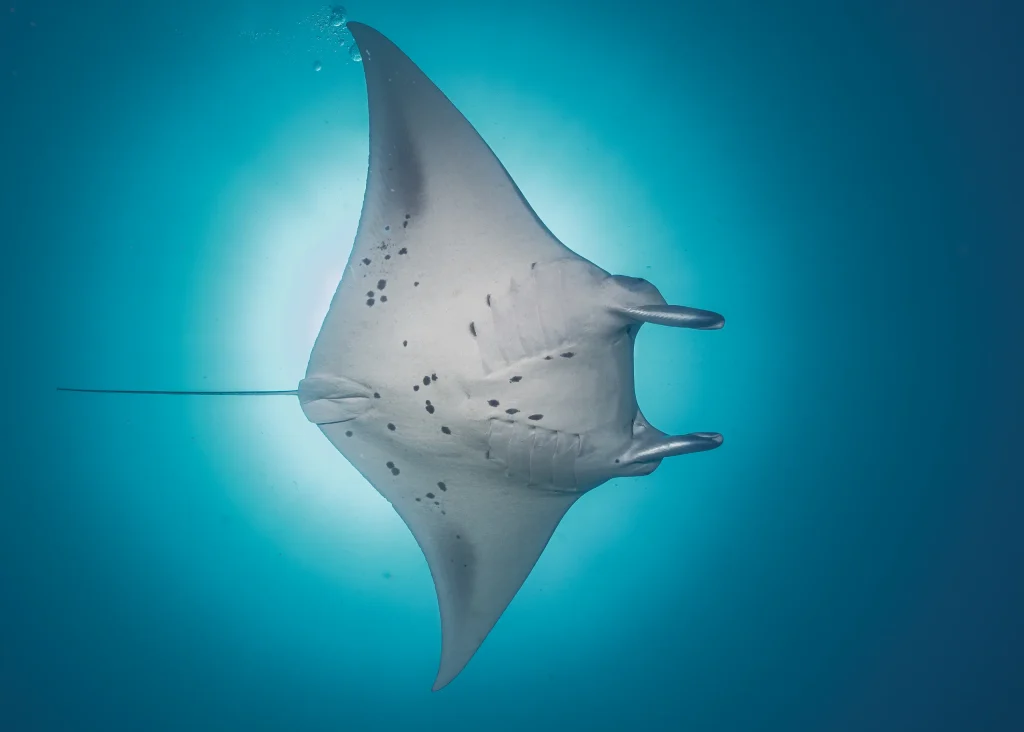
Manta rays are, for many divers, the most anticipated encounter in the Maldives. These rays are impressive in size, but their graceful movement and gentle nature charm anyone lucky enough to encounter them in the wild. While manta rays can be found across many Maldivian atolls, the most iconic site would be Hanifaru Bay in Baa Atoll.
During the southwest monsoon, plankton-rich currents funnel into the bay, drawing large numbers of reef manta rays to feed. At the peak of the season, more than 250 mantas have been recorded feeding together, making Hanifaru Bay one of the largest documented manta ray aggregation sites in the world.
During these aggregations, mantas perform what researchers call somersault feeding (or barrel rolls), spinning repeatedly to stay within the densest plankton patches, and chain feeding, where dozens of individuals line up head-to-tail, each sweeping through the water column in sequence as the line moves through a plankton-dense area.
There are two main species of manta ray in the Maldives:
- Reef manta rays (Mobula alfredi): The resident population of the Maldives is the largest known concentration of this species anywhere in the world. While Hanifaru Bay draws the biggest seasonal aggregations between August and September, reef mantas can also be seen in different parts of the Maldives, including the Lily Rock in South Ari Atoll.
- Oceanic manta ray (Mobula birostris): Less commonly seen at popular dive sites, these mantas are found throughout the Maldives, which hosts the third largest oceanic manta population in the world. They tend to appear during strong plankton blooms and in deeper, open waters, and encounters are considered a special highlight for divers.
Whale Sharks
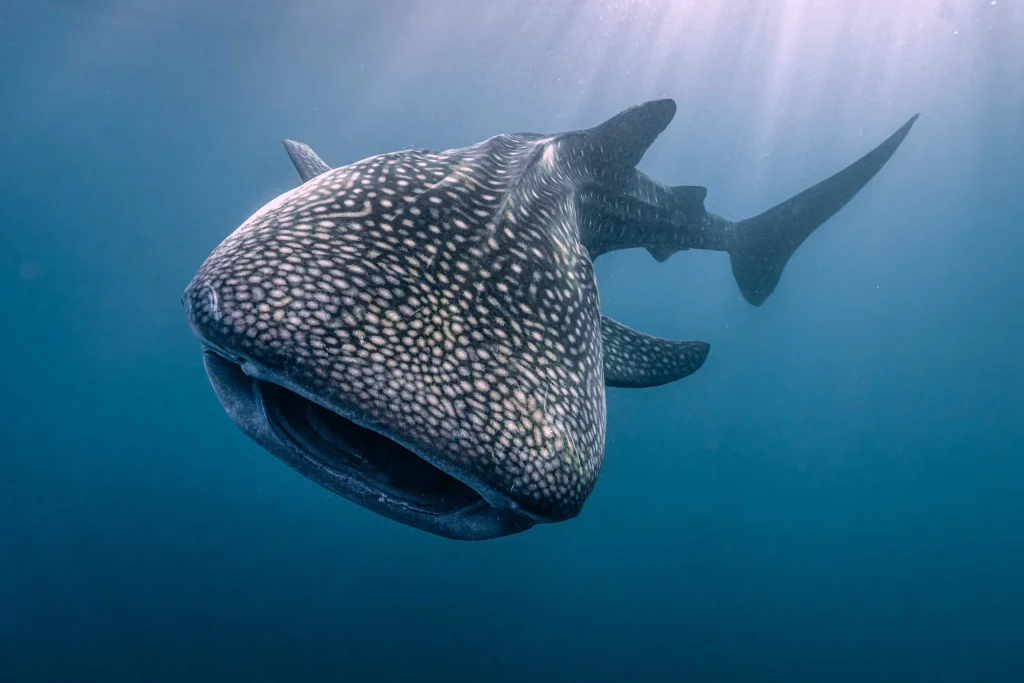
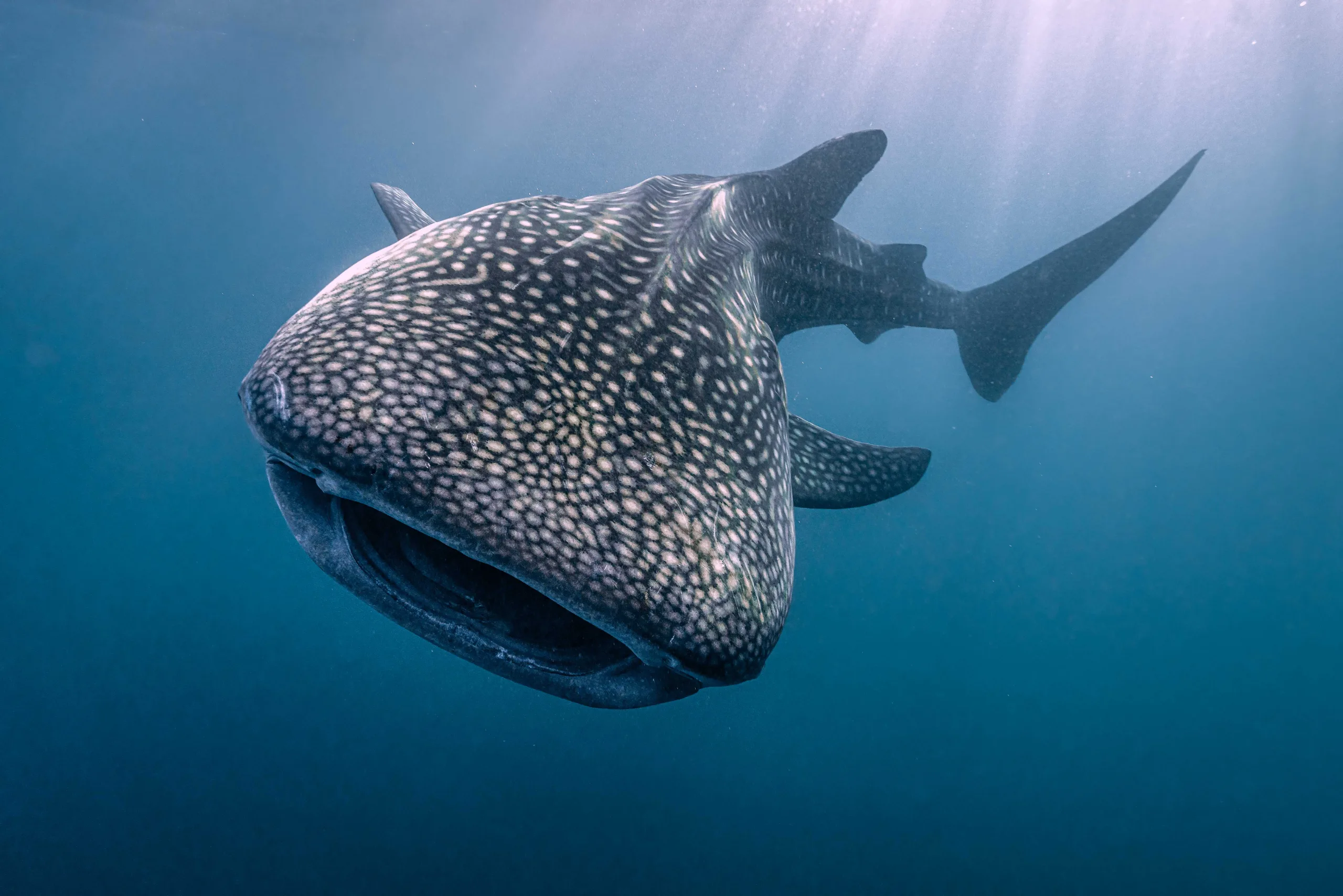
The whale shark (Rhincodon typus) is the largest fish in the ocean, and among its most gentle inhabitants. Adult whales can grow up to 12 meters long, with some individuals recorded even larger, though it is worth noting that many whale sharks observed in the Maldives, particularly in South Ari Atoll, are juveniles and have yet to reach their full size.
These slow-moving filter feeders pose very little threat to humans and are generally solitary animals, though they can be found in groups during plankton blooms, which are sudden, short-lived surges in microscopic algae (phytoplankton) or tiny aquatic animals. Since whale sharks feed on these planktons, the nutrient-rich currents that flow through the Maldives make these waters an excellent place to encounter them. 18 19
South Ari Atoll is one of the best places in the Maldives to see whale sharks. The South Ari Marine Protected Area (SAMPA) is one of the very few places in the world where whale sharks are present year-round. Juvenile male whale sharks make up most sightings here, and many individuals show high site fidelity, returning to the same area repeatedly.
Whale sharks can be spotted across the archipelago, but sighting conditions shift with the monsoon and plankton availability. South Ari holds up well across most of the year, though visibility and exact locations will vary depending on the season.
Tiger Sharks
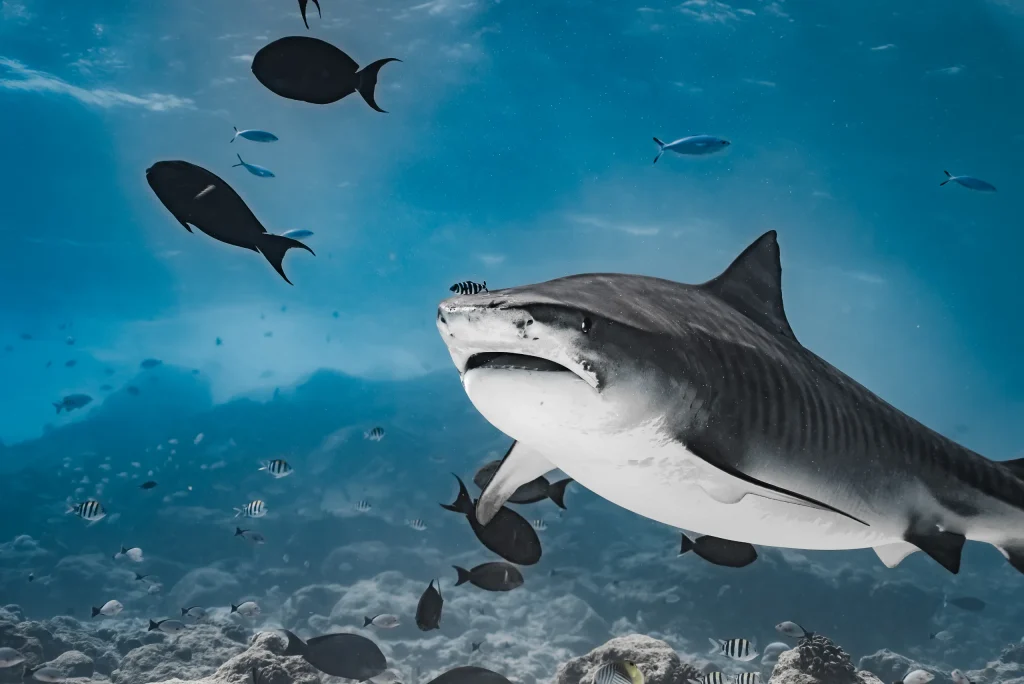
The tiger shark (Galeocerdo cuvier) is the second-largest predatory shark in the world after the great white, reaching lengths of up to 5 meters. Named for the dark vertical stripes that run along their flanks, the markings are most vivid in younger individuals and fade gradually with age. They are powerful sharks with a broad, flat head and a bluntly rounded snout that makes them instantly recognizable.
In the Maldives, Fuvahmulah Atoll has earned a solid reputation among shark divers for its tiger shark encounters. Unlike many species tied closely to seasonal patterns, tiger sharks at Fuvahmulah can be found throughout the year.
Globally, tiger sharks are listed as Near Threatened on the IUCN Red List, with fishing pressure as the primary driver of population decline. The Maldives established a shark fishing ban in 2010, and tiger sharks continue to be sighted regularly across the archipelago’s dive sites.
Other Marine Life You Can See in the Maldives
While manta rays, whale sharks, and tiger sharks are the Maldives’ most famous ocean giants, the reefs are also home to a wide variety of other fascinating marine species. Keep your eyes peeled, and you might find one (or more!) of these sea creatures during your visit:
Sea Turtles
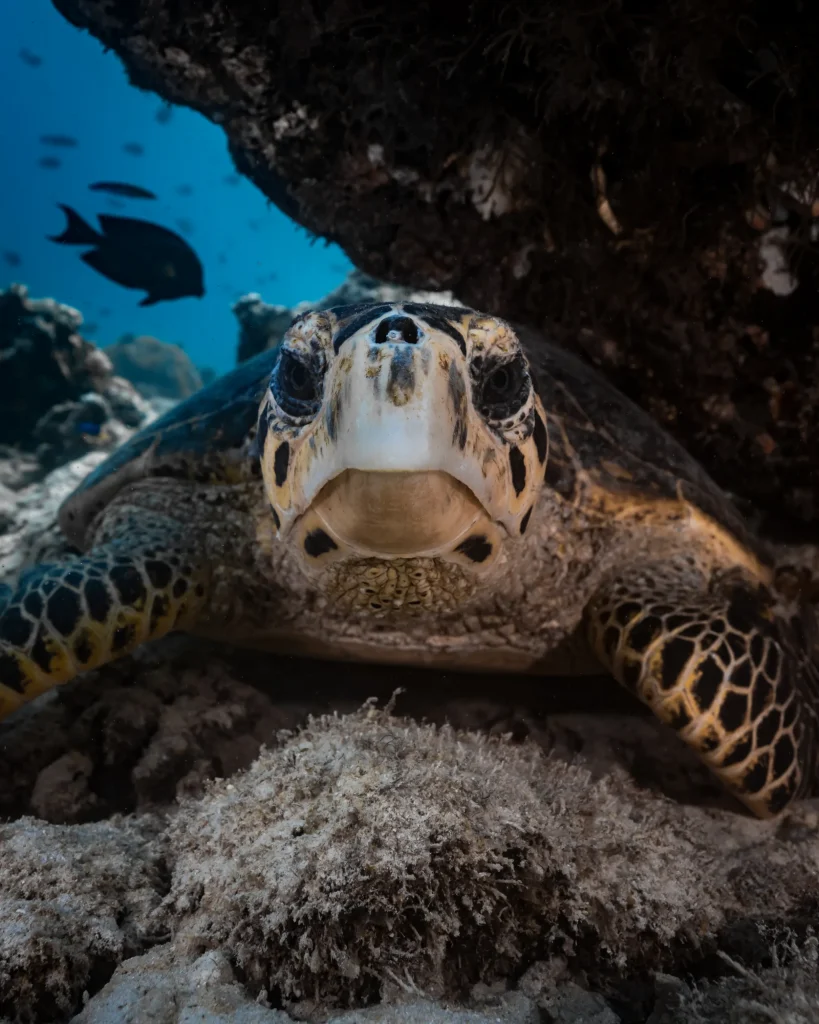
The Maldives is home to several sea turtle species, though green turtles (Chelonia mydas) and hawksbill turtles (Eretmochelys imbricata) are the ones most divers will encounter. Loggerhead and leatherback turtles pass through as migratory visitors and are rarely seen by divers on the reef, while olive ridleys have been recorded nesting on rare occasions and have also been spotted in deeper waters.
Hawksbill encounters are fairly common across all of the atolls, while Green turtle sightings are more concentrated, with the best chances in Lhaviyani, Laamu, and Baa Atolls, where healthy seagrass beds provide their primary food source
Sharks
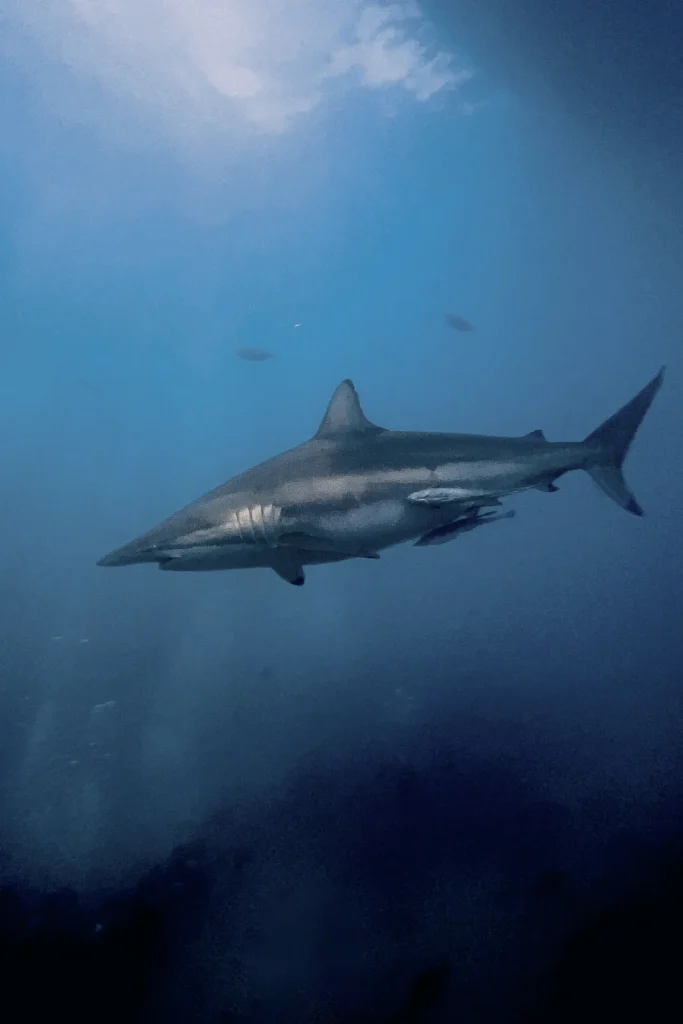
The Maldives is home to over 26 shark species, making it one of the most reliable places in the world to encounter sharks while diving. The most commonly spotted species are the reef sharks.
Blacktip reef sharks, grey reef sharks, and whitetip reef sharks are often seen along reef edges and slopes. Tawny nurse sharks are just as reliable a presence, typically spotted resting in crevices and under coral ledges during the day. For reef shark encounters, the central atolls are a natural place to start, with sites across Ari Atoll and the waters surrounding Malé accessible on most itineraries.
For truly exceptional encounters, head to Fuvahmulah in the far south. Aside from tiger sharks, thresher sharks can occasionally be spotted in this atoll. Additionally, hammerhead sharks can sometimes be encountered at dawn at Rasdhoo’s Hammerhead Point.
That being said, sightings are unpredictable, so you are highly recommended to go in without expectations and treat any encounters as a bonus.
Colorful Reef & Macro Life
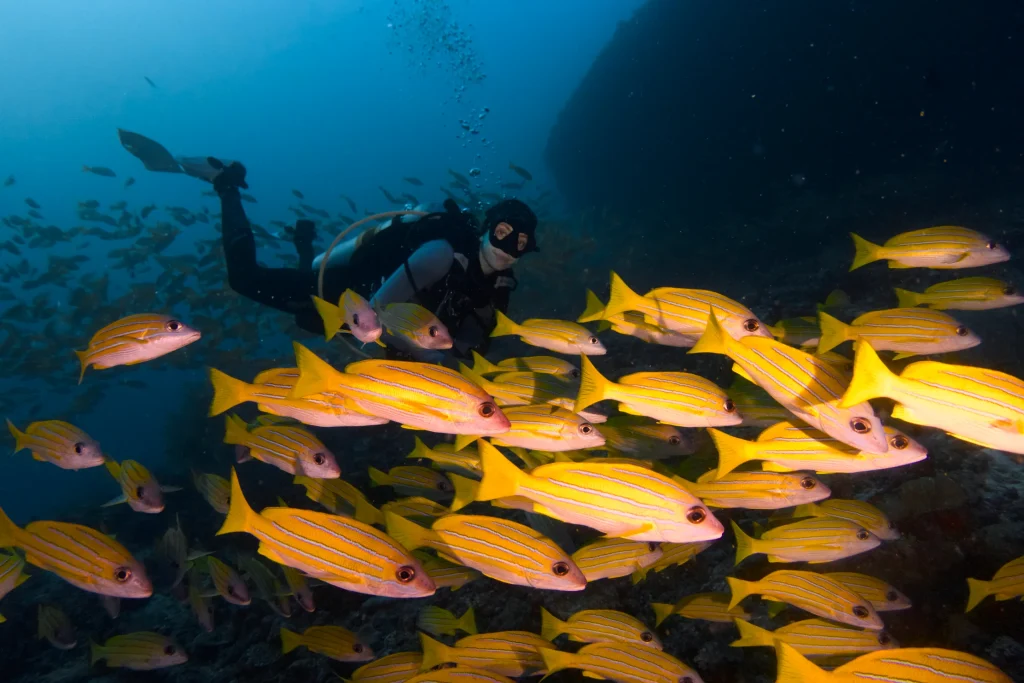
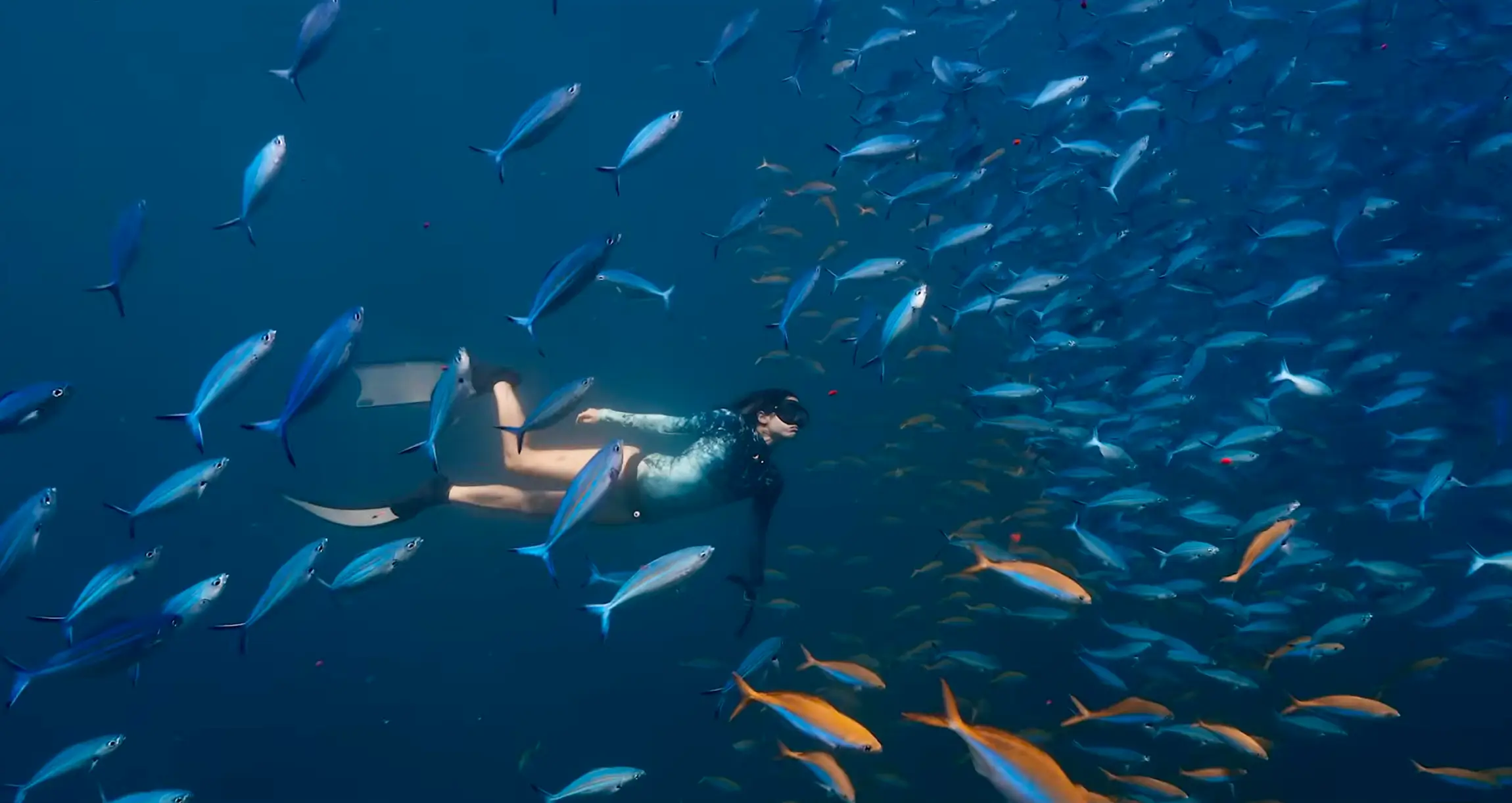
Reefs across the atolls are constantly in motion. Clouds of anthias shimmer above coral gardens while schools of fusiliers rush through the current. Bannerfish, triggerfish, and sweetlips glide along the reef edges, adding to the vibrant life that surrounds divers on every descent. The humphead wrasse, often called the Napoleon wrasse, is a common sight in the central atolls as well.
For macro enthusiasts, the detail work in the Maldives is just as compelling. The region has over 350 documented nudibranch species, and researchers are still finding new ones, making it a genuinely rewarding destination if you love these colorful critters.
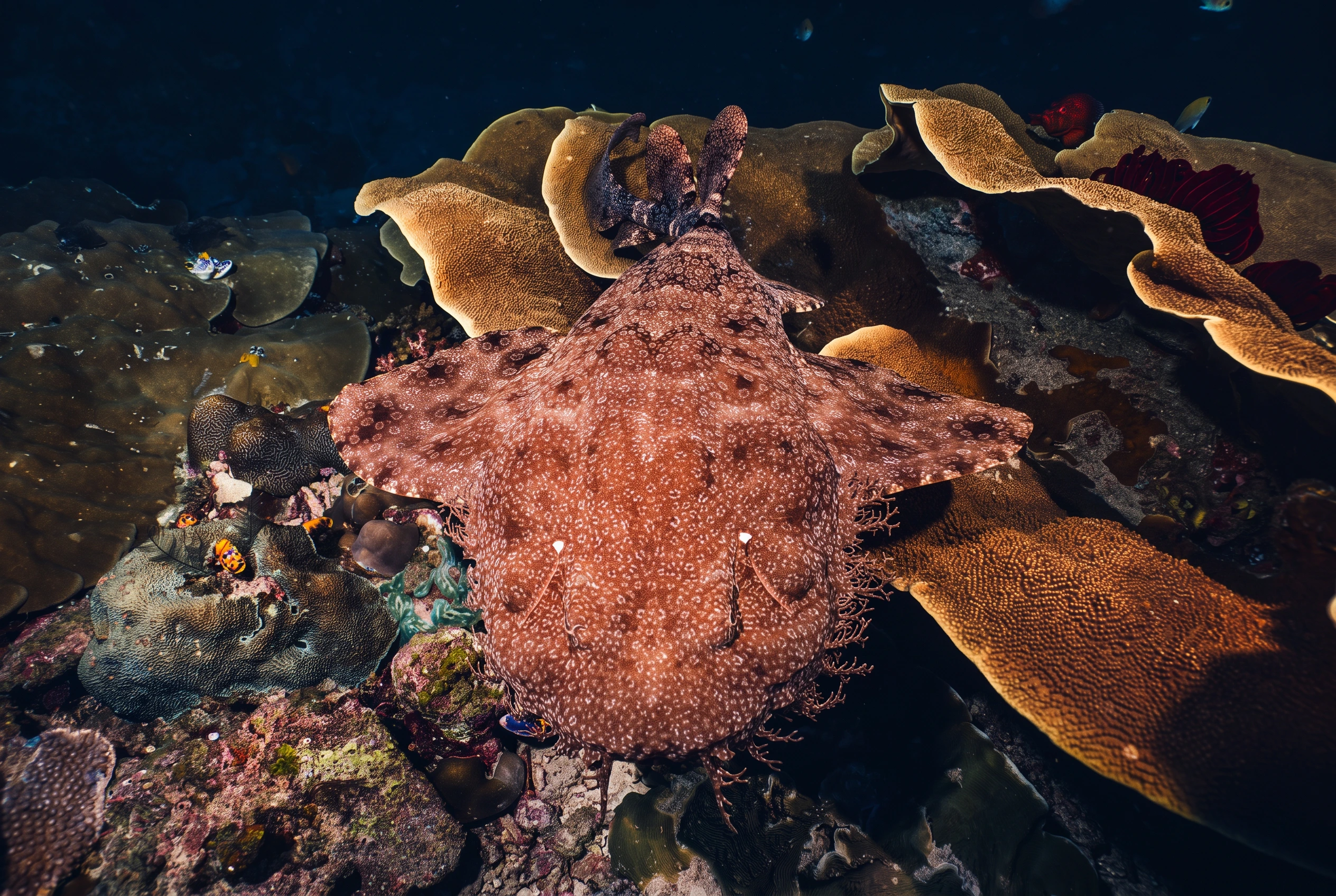
Aside from nudibranchs, you can also find ghost pipefish, including ornate and halimeda ghost pipefish, though their camouflage makes them nearly invisible without a sharp eye. Warty frogfish and cleaner shrimp are also part of the picture. An experienced dive guide makes all the difference here, as many of these creatures can be challenging to spot.
Dolphins
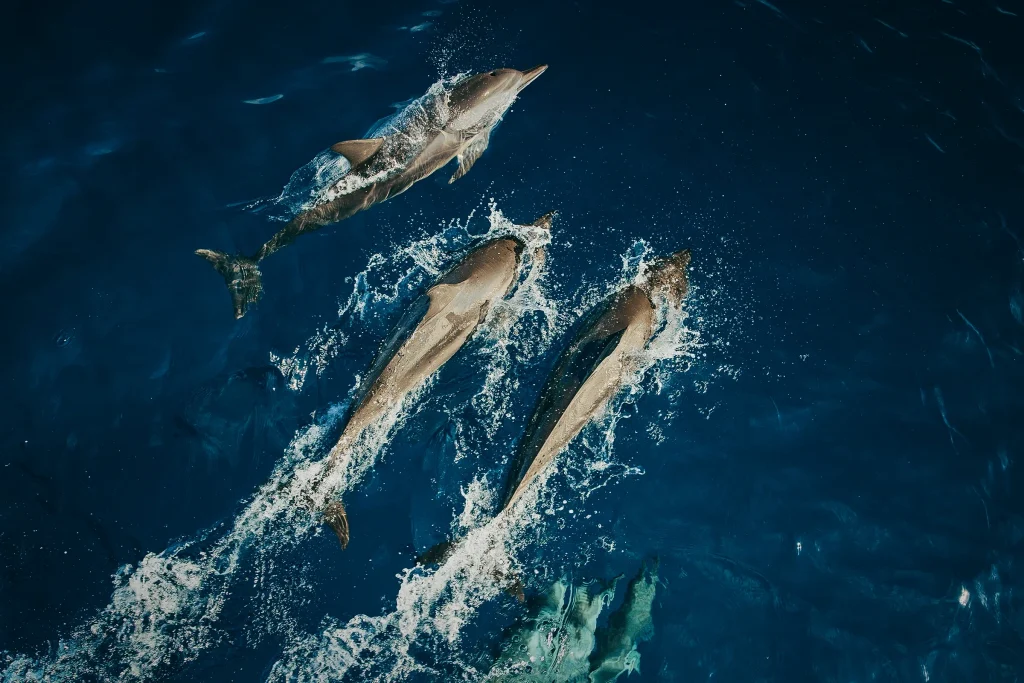
Spinner dolphins (Stenella longirostris) and Indo-Pacific bottlenose dolphins (Tursiops aduncus) are both found in Maldivian waters, though encounters often happen unexpectedly. Pods can sometimes be seen moving through atoll channels or passing by during open-water crossings between dive sites, often arriving suddenly and disappearing just as quickly.
Spinner dolphins follow a daily rhythm, resting and socializing in sheltered waters during the day before heading offshore at night to hunt in deeper water. Indo-Pacific bottlenose dolphins are usually seen in smaller groups in both coastal and inshore waters.
Where and When to See Marine Life in the Maldives
Marine life in the Maldives is largely a year-round affair. Turtles, manta rays, whale sharks, and reef sharks are all present across the archipelago in most seasons, and encounters can happen on any dive.
What shifts with the monsoons and plankton cycles is where concentrations gather and which sites tend to come into their own. Knowing the seasonal patterns helps, though in the Maldives, a fair amount comes down to being in the water at the right place and time.
Seasonality
Southwest Monsoon (May to November): The southwest monsoon brings plankton-rich waters, drawing manta rays and whale sharks in large numbers. Visibility may be reduced, but pelagic sightings are exceptional.
Northeast Monsoon (December to April): During this period, the waters are clearer with better visibility, making it the best time for reef dives and underwater photography. Currents are generally calmer, offering easier conditions for snorkelers. Whale sharks remain a reliable presence in South Ari year-round. Manta rays can also be spotted during this period, particularly in South Ari, Raa, Lhaviyani, and North Malé Atoll.
Best Atolls for Biodiversity
These atolls are often recommended for their variety of marine life, range of dive sites, and good chances of wildlife encounters:
- South Ari Atoll: The Maldives’ most reliable destination for whale sharks and seasonal manta encounters.
- Baa Atoll: A UNESCO Biosphere Reserve, Baa Atoll is home to Hanifaru Bay, where large manta aggregations take place during the southwest monsoon. August and September offer the greatest chance of witnessing these gatherings at their most spectacular.
- Vaavu Atoll: Known for channel dives teeming with sharks and large schools of fish. 53
- South Malé Atoll: A mix of thilas and channels that support a diverse range of marine life in the Maldives.
- Huvadhoo Atoll: Excellent opportunities for thrilling channel dive, with strong currents and shark action.
- Fuvahmulah Atoll: A remote, shark-rich atoll in the deep south, known for its current-swept channels and the chance of encountering tiger and thresher sharks alongside other pelagic species.
Seasonal Highlights
Marine life in the Maldives shifts with the seasons, and every region has its moment. Rather than chasing a single species, the most rewarding approach is to align your trip with the right atoll at the right time of year.
Scubaspa’s itineraries are planned around these experiences:
- Deep South Expedition (February and March): The deep south is at its most rewarding during these months, with Fuvahmulah drawing tiger sharks, whale sharks, and a range of pelagic species.
- Far North (August and September): Hanifaru Bay reaches peak season, with some of the largest manta ray aggregations recorded anywhere in the world.
- Best of the Maldives (Year-Round): The schedule shifts with the monsoon, following cleaning stations, whale shark activity, and the seasonal movement of marine life across the central atolls.
Best Sites: Divers vs. Snorkelers
Some dive sites and regions in the Maldives come with specific rules or conditions worth knowing before you plan your trip.
For example, Hanifaru Bay is a snorkeling-only site. Diving is prohibited year-round to protect the area’s famous manta ray feeding aggregations. Snorkelers can still witness these gatherings at close range while floating at the surface.
Meanwhile, the southern areas offer a different experience altogether. Sites around Fuvahmulah and Huvadhoo Atoll are oriented toward deep-water channel dives with strong currents, where the real action (tiger sharks, thresher sharks, and other pelagics) tends to happen at depth.
Snorkelers are welcome on board Scubaspa’s Deep South itinerary and can enjoy the surface conditions, but this is a region that rewards divers most.
Responsible Tourism & Conservation
Marine encounters in the Maldives are only as good as the health of the reefs that make them possible. Visitors who dive and snorkel responsibly are a direct part of keeping those reefs alive, for the next diver and the one after that.
Responsible and Sustainable Travel Tips in the Maldives
A few simple habits, both in and out of the water, can go a long way in protecting the environment. At Scubaspa, we encourage all guests to follow the Green Fins code of conduct, a globally recognized set of guidelines for responsible diving and snorkeling.
Below are some of the key principles to keep in mind while visiting the Maldives.
- Respect marine wildlife: Keep a respectful distance from marine life. This includes never touching, chasing, or feeding them, and avoiding positioning yourself in their path.
- Maintain good buoyancy: Controlled buoyancy prevents accidental contact with coral and reduces sudden movements that can disturb marine life. It is one of the most important skills a diver has to develop before going into the ocean.
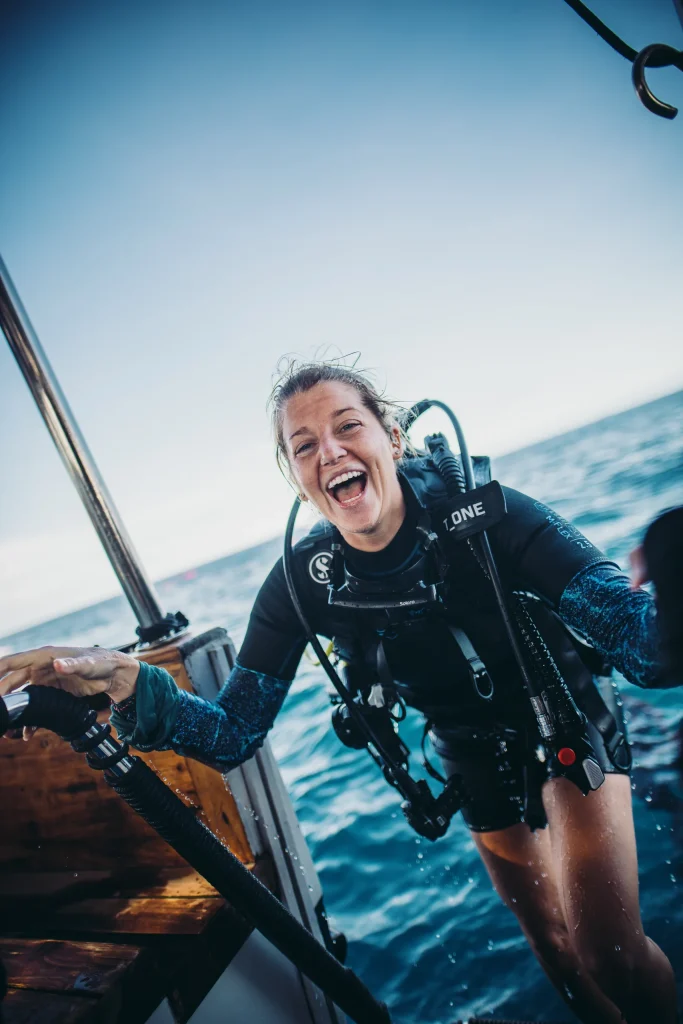
- Enter the water calmly: When approaching marine life, enter the water with care and minimal disruption. A calm, controlled entry near pelagics or reef animals makes a meaningful difference to how they respond.
- Photograph responsibly: Use natural light where possible and avoid flash photography near sensitive species. Follow your dive operator’s guidance on maintaining appropriate distances at wildlife sites.
- Choose reef-safe sunscreen: Choose a mineral-based sunscreen with non-nano zinc oxide or titanium dioxide, which are considered safer for reef environments. Brands like Stream2Sea offer reef-conscious options worth packing for your trip.
- Wear UV-protective clothing: Rash guards and UV swimwear reduce reliance on sunscreen during long sessions in the water.
Conservation Programs to Support and Learn About
Several organisations work in the Maldives to monitor megafauna and to convert science into better protection and tourism practices. The Manta Trust leads long-term research and education projects focused on manta and mobula rays and helps develop codes of conduct for tourism operators.
Additionally, the Maldives Whale Shark Research Programme (MWSRP) conducts population studies, tracks movements, and engages in public outreach to inform safer, evidence-based encounters with whale sharks.
Explore the Best of the Maldives with Scubaspa
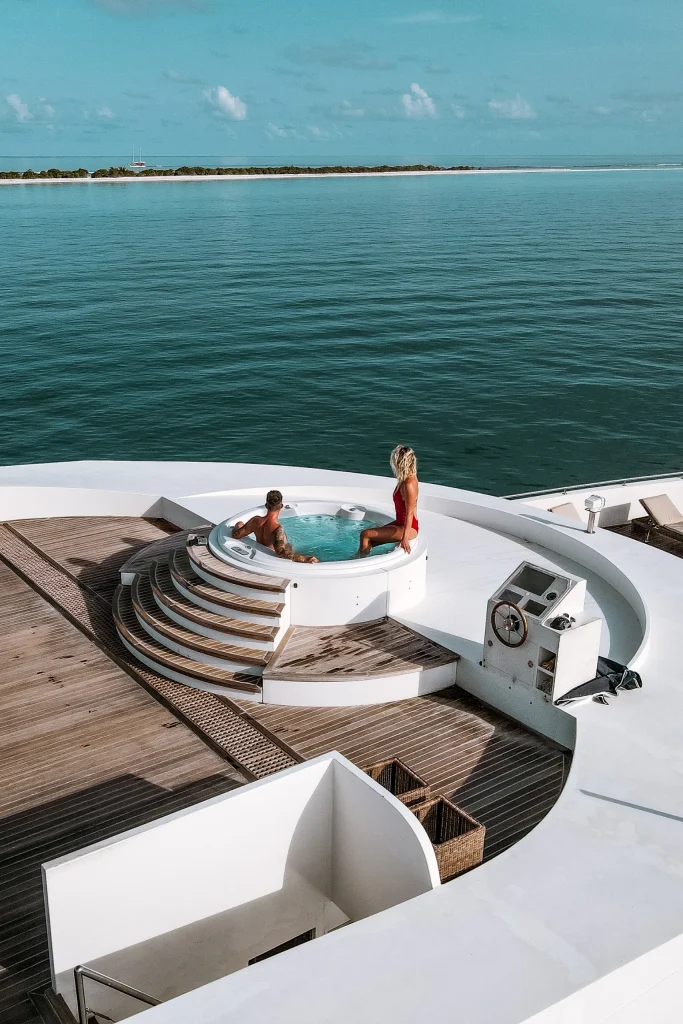
The Maldives is large, and some of its best dive sites are far from the central atolls. A liveaboard with a well-planned itinerary gives you a greater chance of being in the right place at the right time for the wildlife encounters the Maldives is known for.
Scubaspa Maldives operates two liveaboard with PADI 5-Star Dive Resort status, built around that kind of itinerary. For a closer look at life on board and what guests encounter throughout the year, follow us on Instagram, where we regularly share stories and moments from our community of divers.
Ready to explore the Maldives from the heart of the ocean? Book your liveaboard diving adventure with Scubaspa today!