

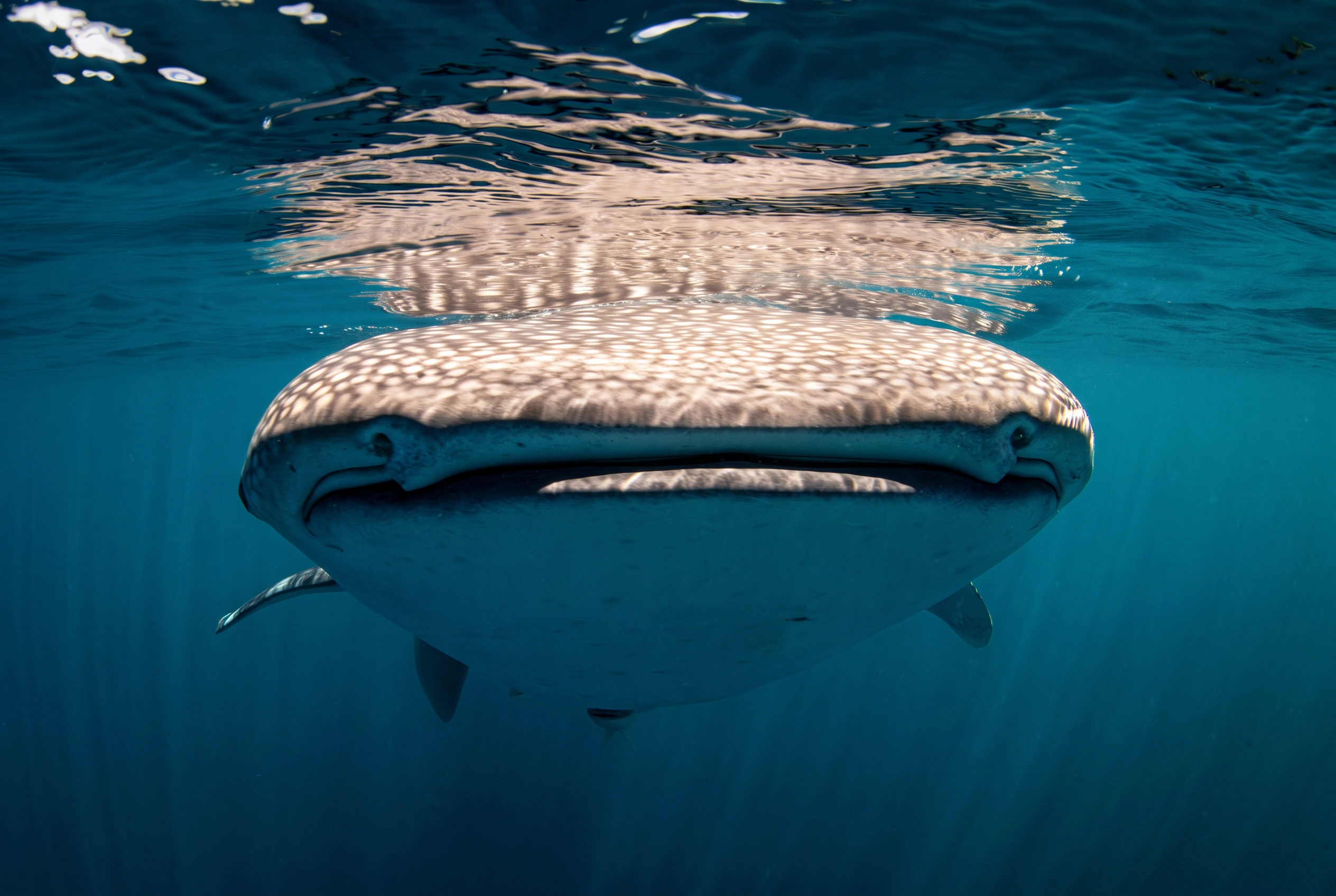
The Remote South of West Papua
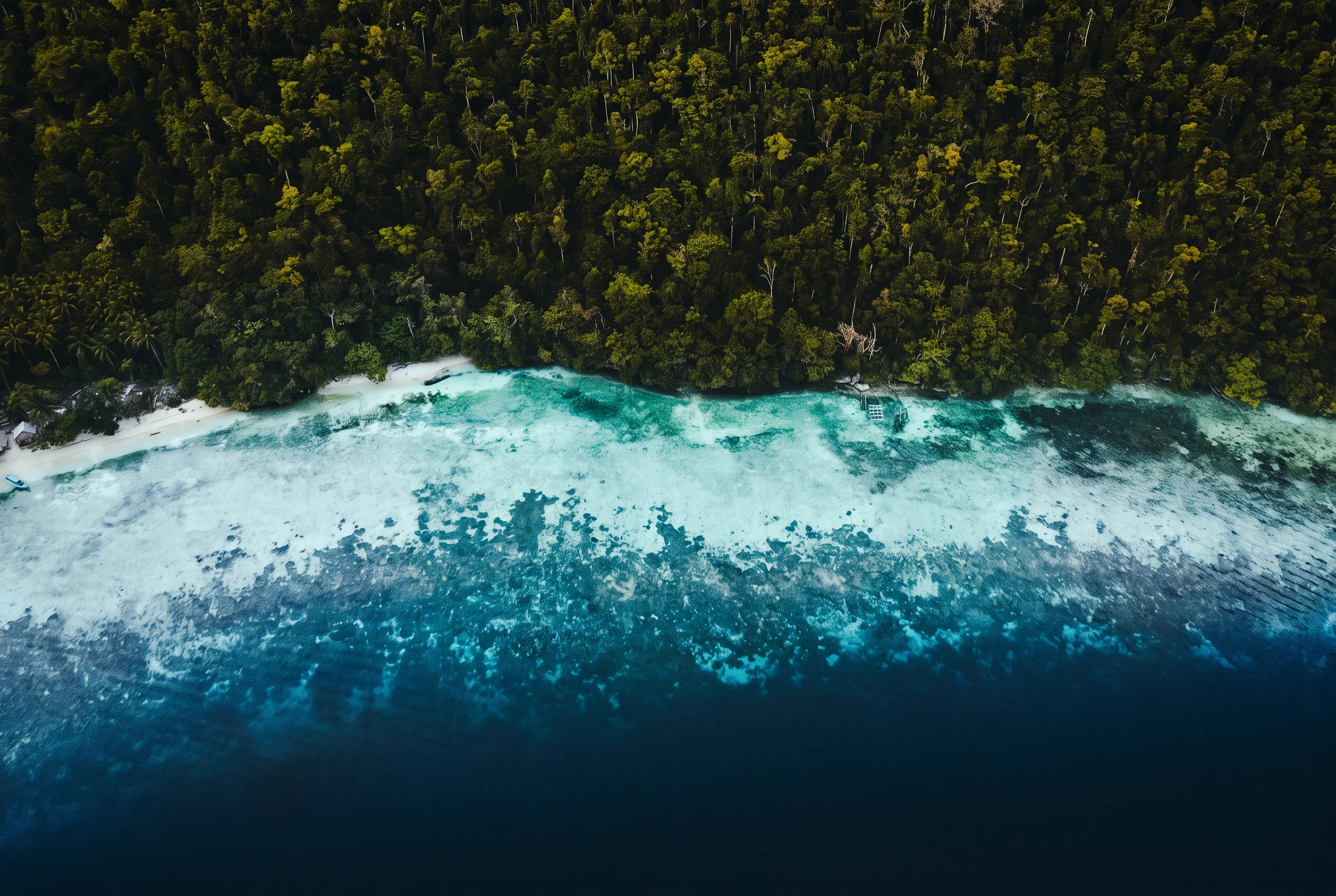
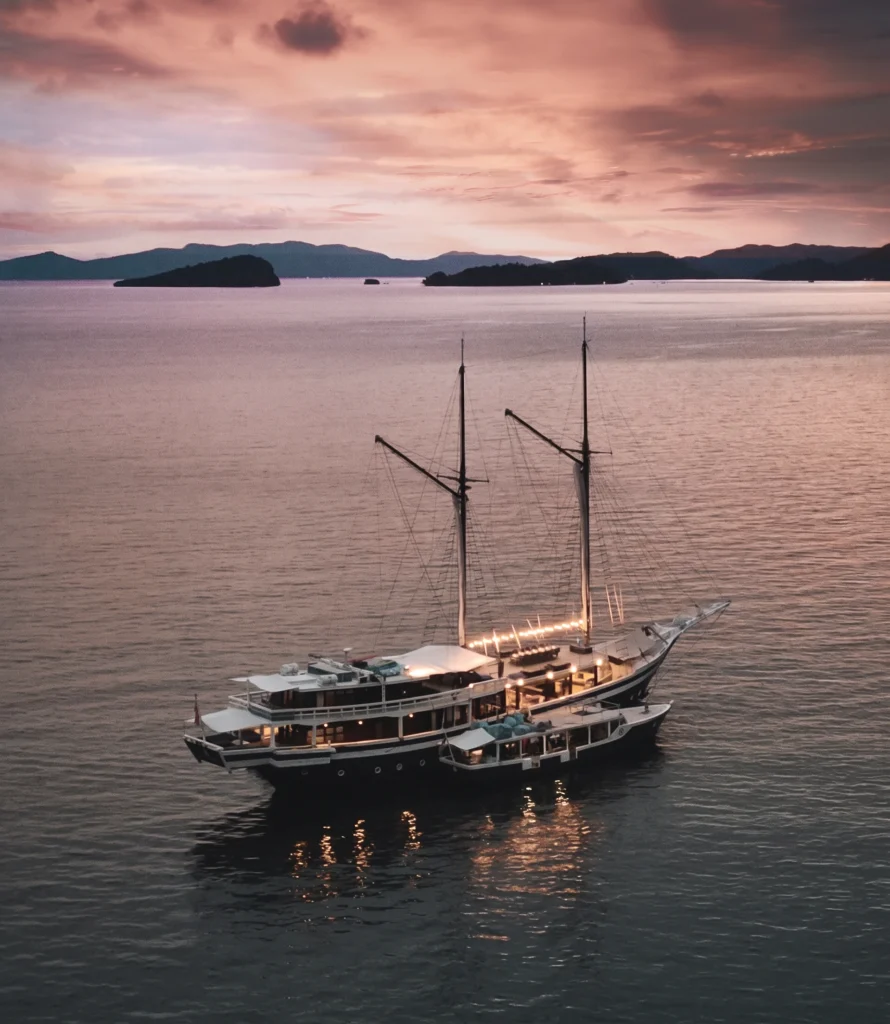
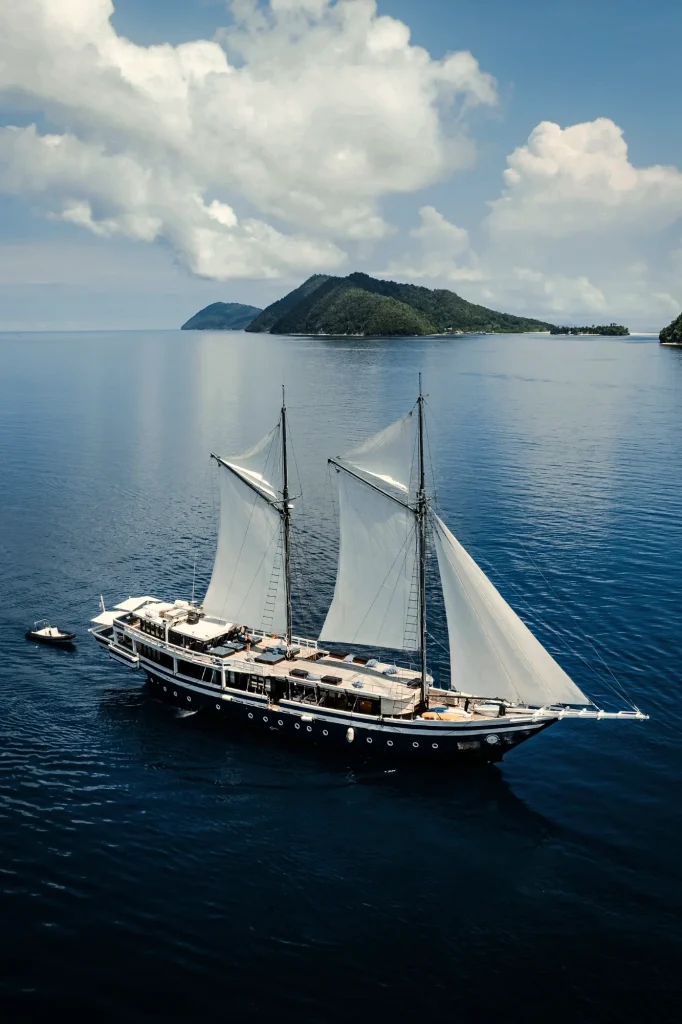
Triton Bay lies in the Kaimana region of southern West Papua, away from the usual liveaboard routes. Scubaspa Zen reaches this remote area on two longer itineraries, connecting Triton Bay with Raja Ampat or the Banda Sea. Here, jungle-covered hills meet limestone cliffs, waterfalls, and secluded bays, while traditional Papuan villages offer a glimpse of local life. It’s a remarkable part of Indonesia, where the landscapes above the water are just as memorable as the marine life below.
Highlights
-
 Routes via Raja Ampat or Ambon
-
 Whale sharks at fishing platforms
-
 Vivid soft coral walls
-
 Endemic walking sharks
-
 Waterfalls and limestone cliffs
Available Routes
-
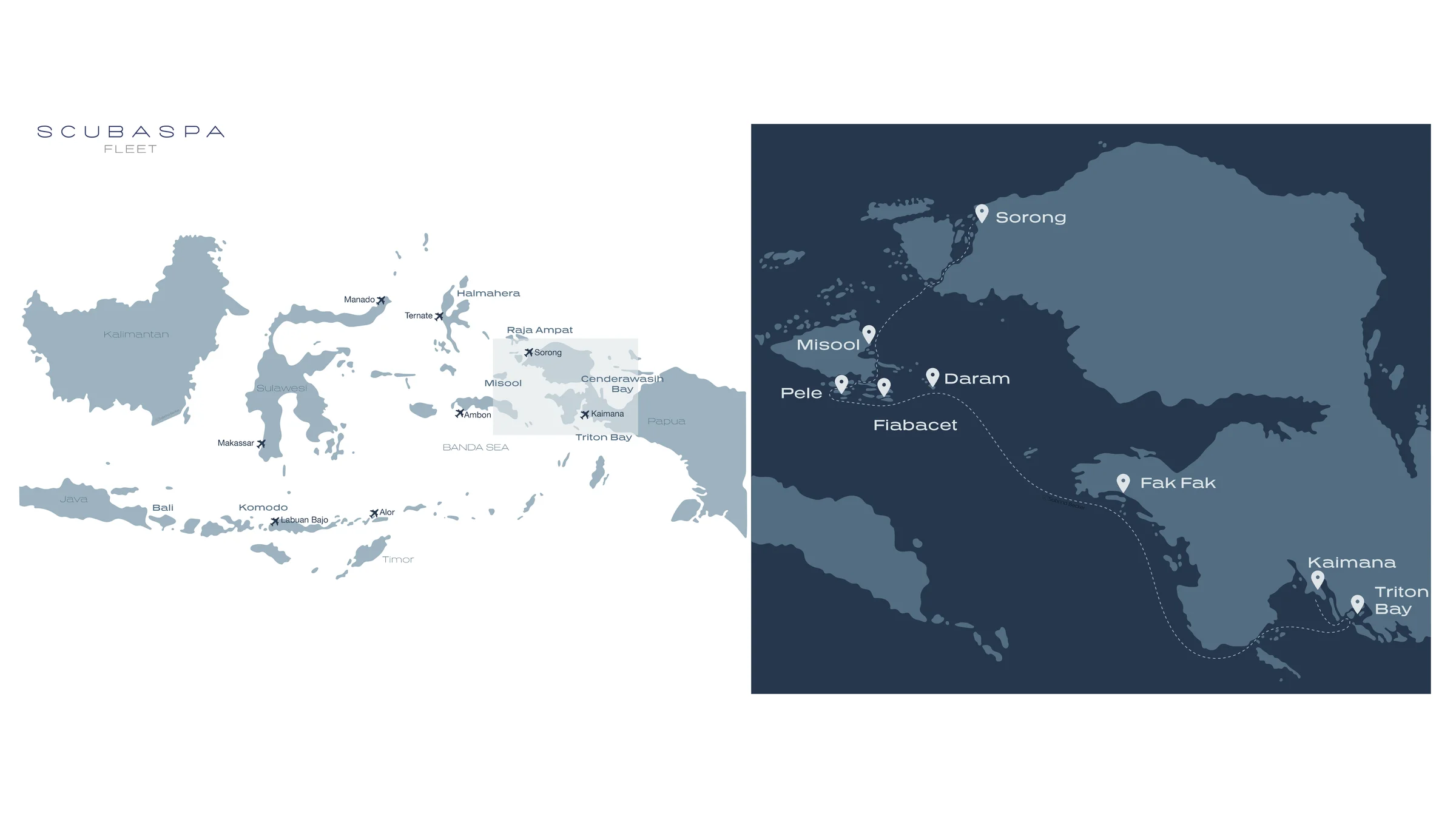
Raja Ampat & Triton Bay
- Starts: Kaimana
- Ends: Sorong
- Oct 22 – Nov 1, 2027
- Starts: Sorong
- Ends: Kaimana
- Feb 9 – 19, 2028
- Starts: Kaimana
- Ends: Sorong
- Feb 20 – Mar 1, 2028
- Starts: Kaimana
- Ends: Sorong
- Oct 7 – 17, 2028
This route connects Triton Bay with southern Raja Ampat, bringing together two distinct regions of West Papua. Traveling between Kaimana and Sorong, we explore Triton Bay’s remote coastline and the dramatic karst islands of Misool, with opportunities to encounter whale sharks near traditional fishing platforms and manta rays at cleaning stations. Secluded lagoons and ancient rock paintings add to the discoveries along the way.
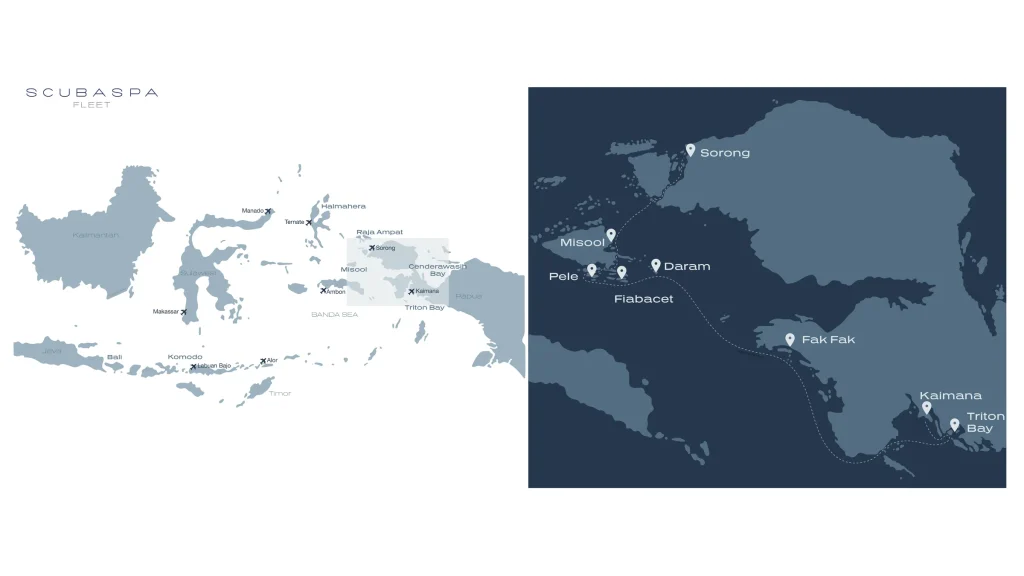 View route map
-
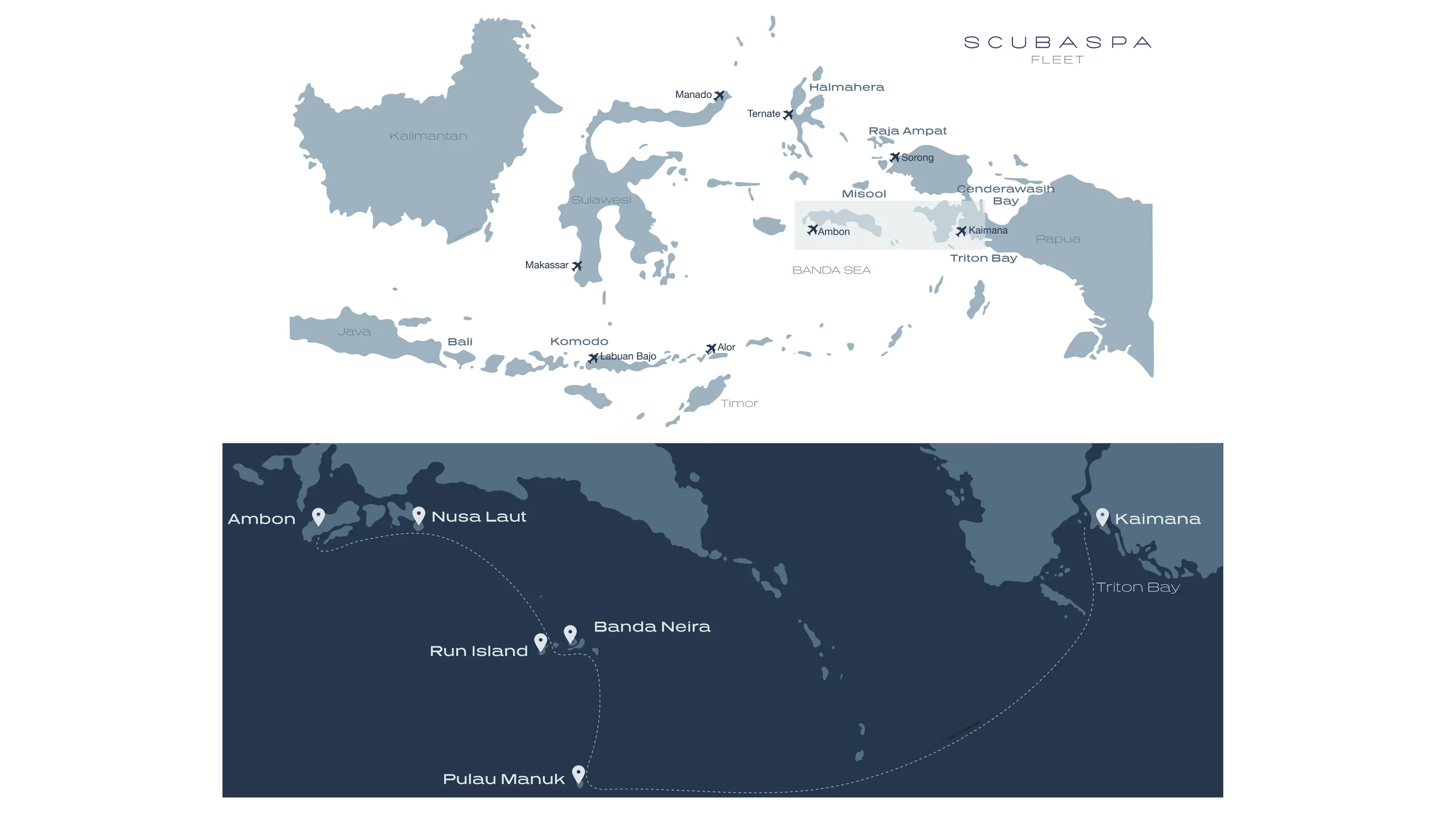
Banda Sea & Triton Bay
- Starts: Ambon
- Ends: Kaimana
- Oct 10 – 20, 2027
- Starts: Ambon
- Ends: Kaimana
- Sept 26 – Oct 6, 2028
This route connects Ambon and Triton Bay through the historic Banda Islands, combining Ambon’s muck diving and rare critters with opportunities to encounter schooling hammerheads in the northern Banda Sea. Along the way, discover Banda Neira’s spice trade heritage and Gunung Api’s volcanic landscapes before reaching Triton Bay’s limestone cliffs, Papuan villages, and whale shark encounters near traditional fishing platforms.
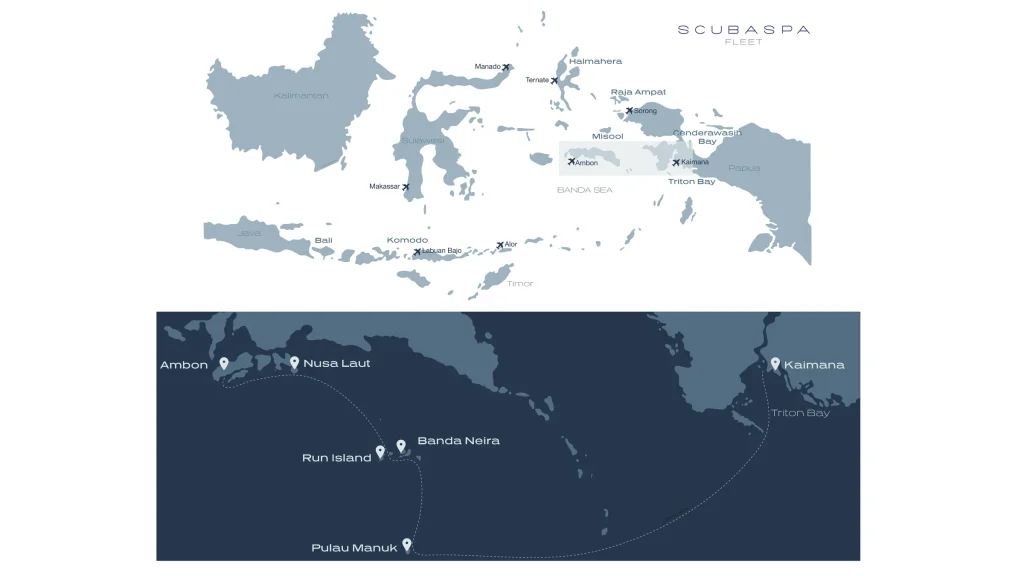 View route map
A Typical Day in Triton Bay
Days are planned around tides, visibility, and weather. The sample day below shows how diving, wellness, and time ashore usually fit together, though times and activities may change with conditions and your cruise director’s plan.
- 05:45
- Sunrise Yoga Start the day with a stretch
- 06:30
- Dive
- 08:00
- Breakfast Live cooking station
- 10:30
- Dive / Snorkeling
- 12:30
- Lunch Live cooking station
- 14:30
- Dive / Snorkeling
- 15:30
- Activity of the day Village visit, waterfall, etc.
- 17:30
- Dive Occasional dusk/night dive
- 19:30
- Dinner À la carte or special evening
Diving Details
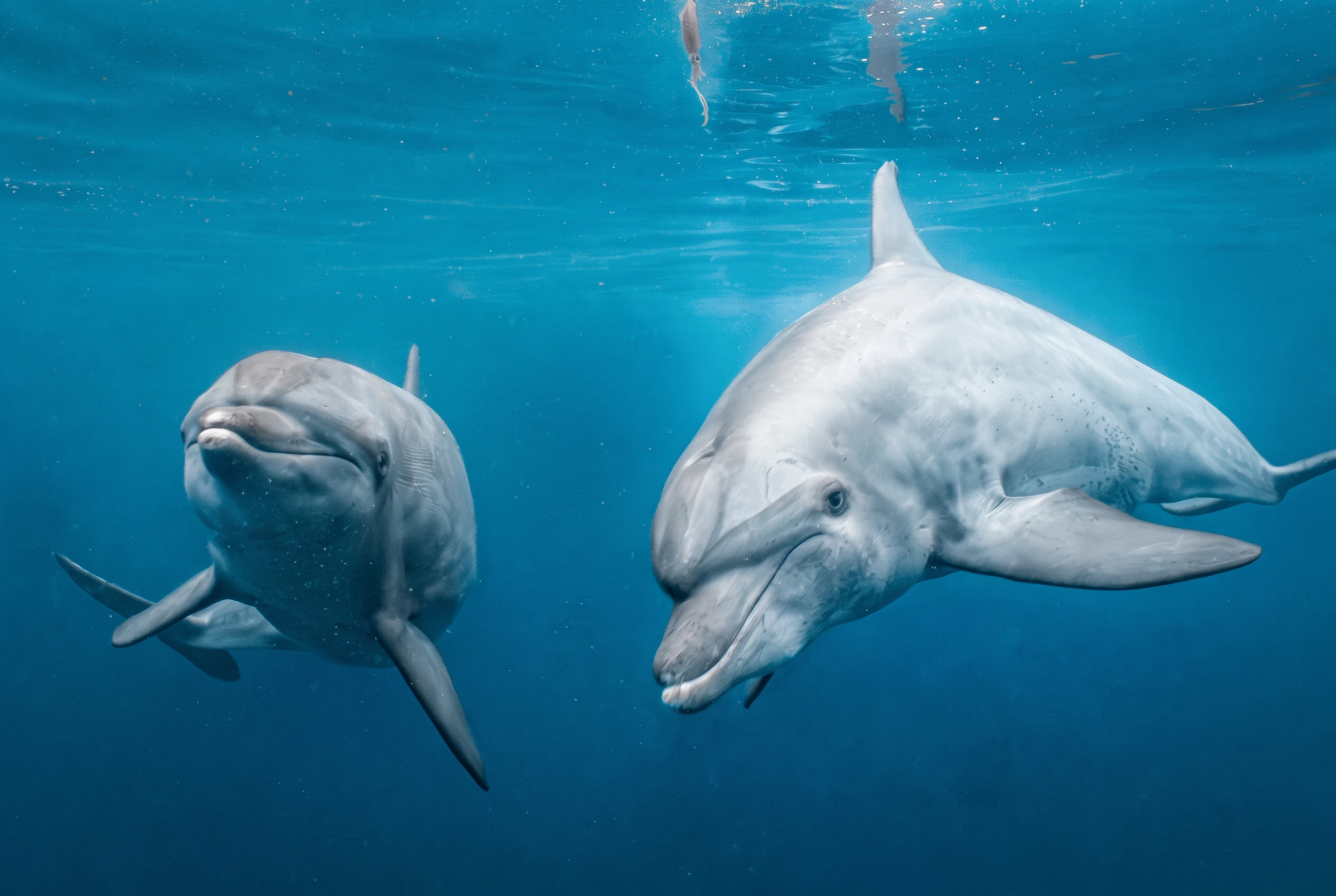
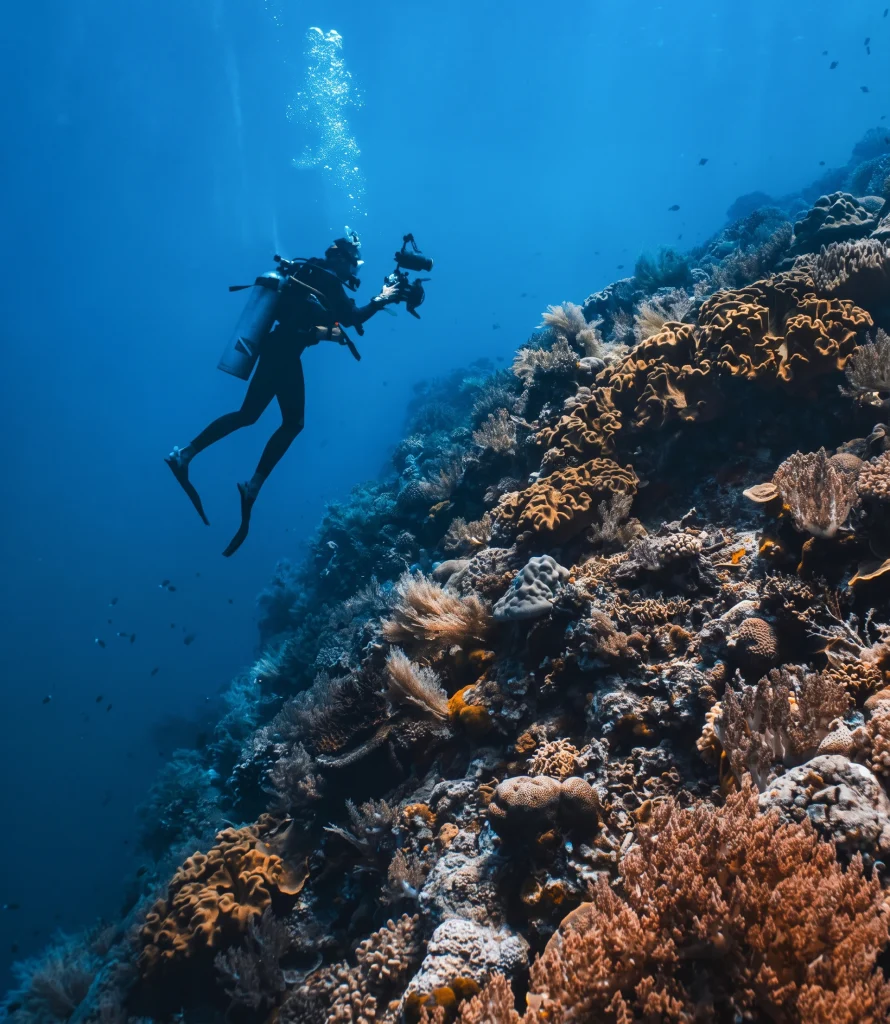
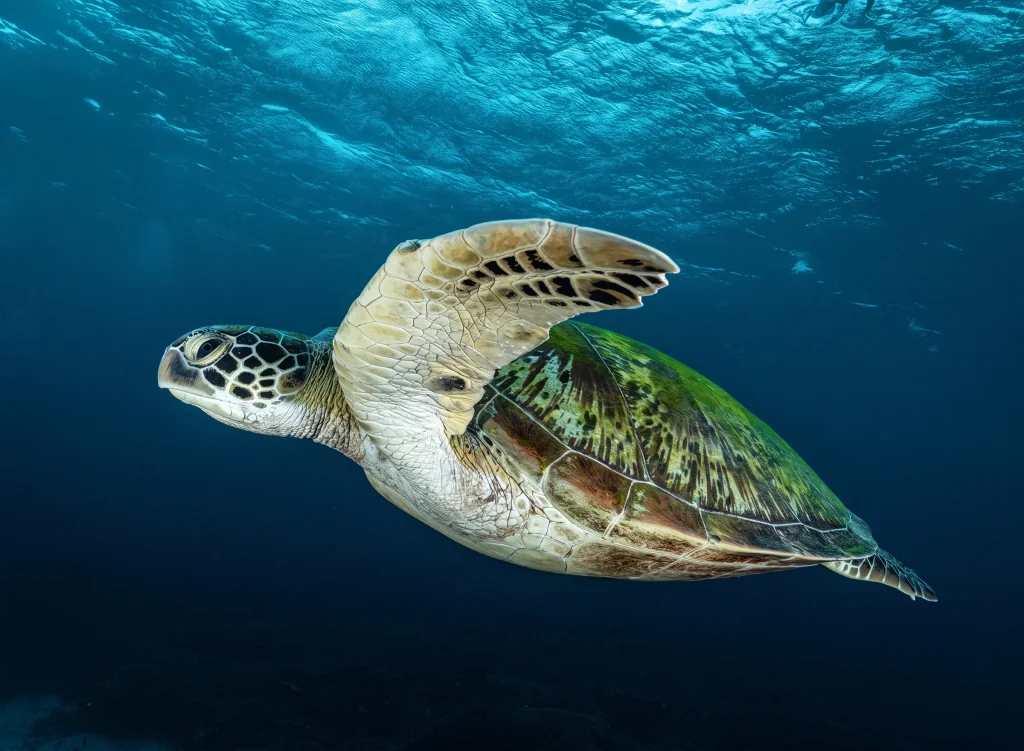
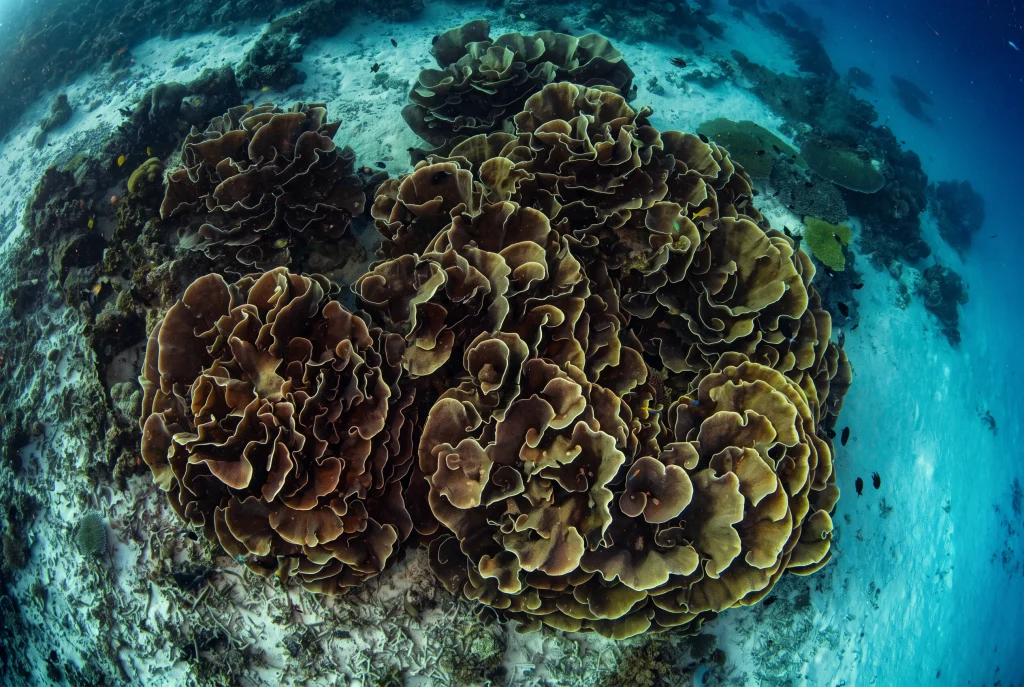
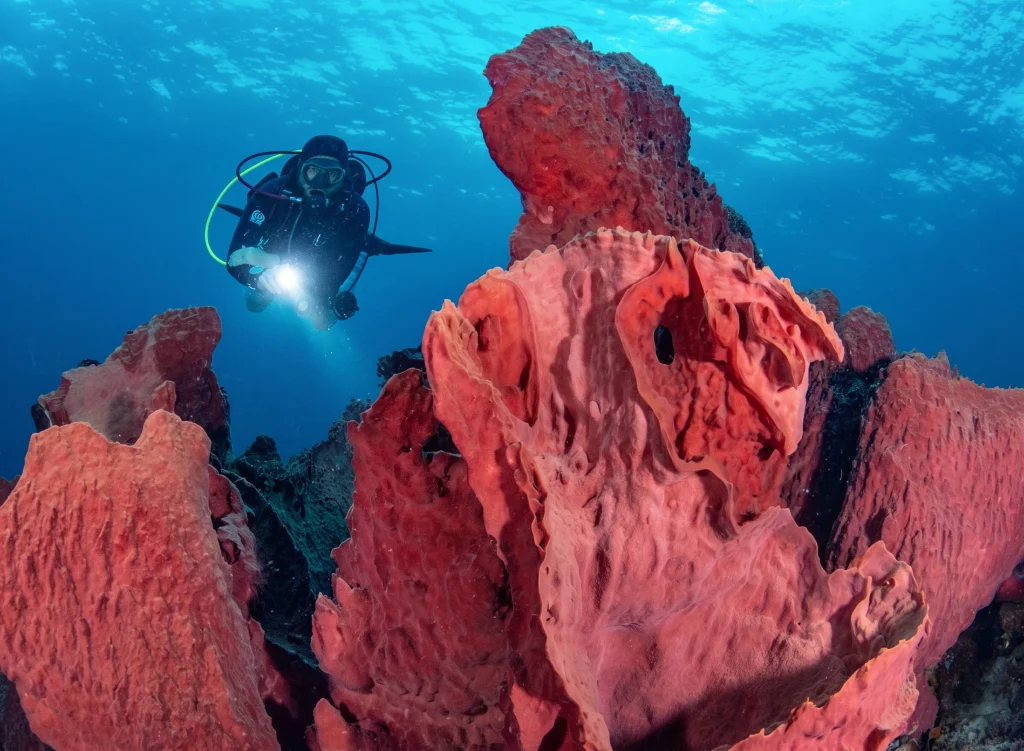
Triton Bay’s diving is defined by color. Nutrient-rich waters support an extraordinary diversity of marine life, with surveys recording 959 reef fish species and 471 coral species. Dense soft corals, sea fans, and schooling fish cover the reefs, while the plankton that makes these waters so productive can also reduce visibility. From coral-covered pinnacles and walls to sheltered reefs, divers may encounter endemic walking sharks, reef fish such as the flasher wrasse, and a wide variety of smaller marine life.
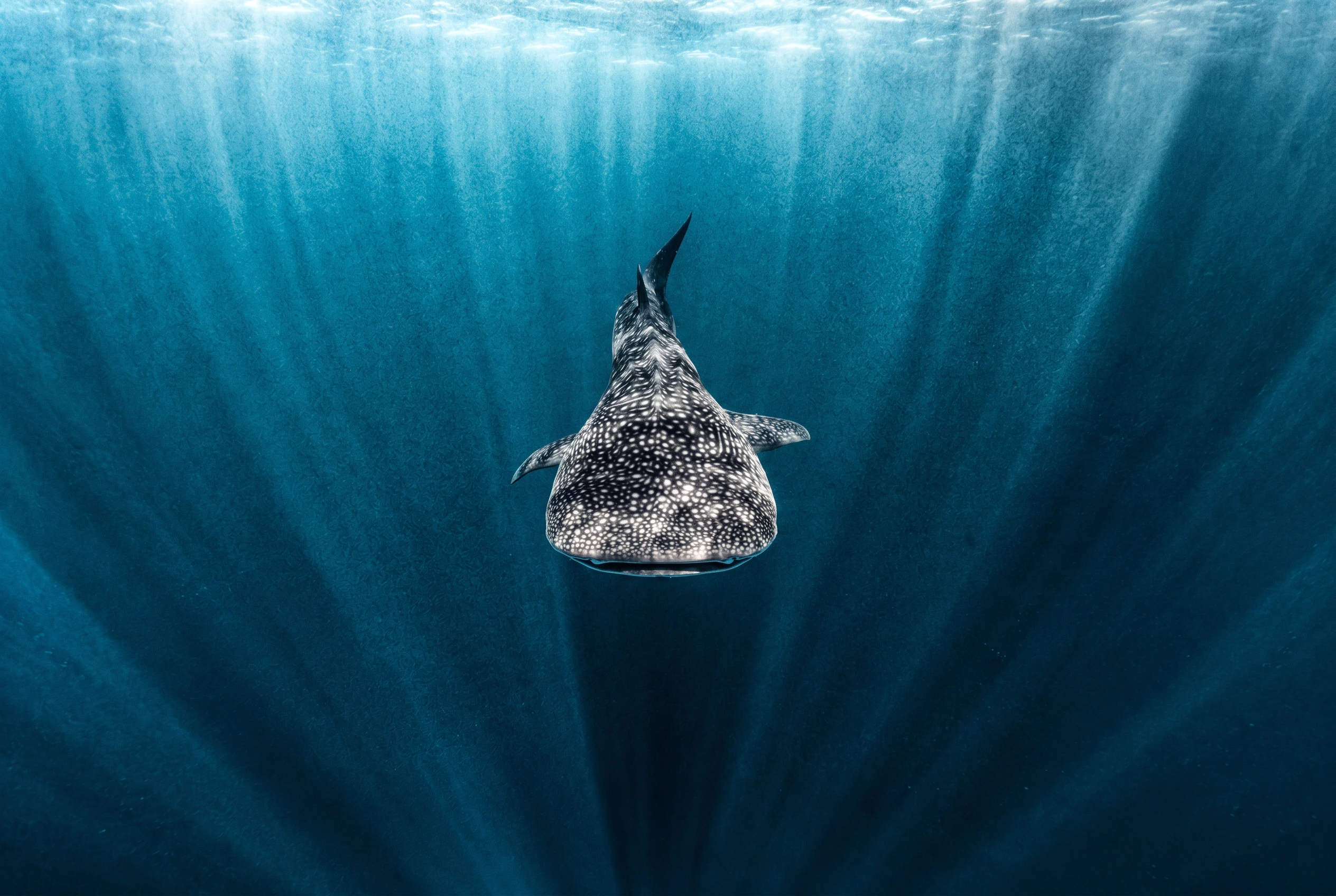
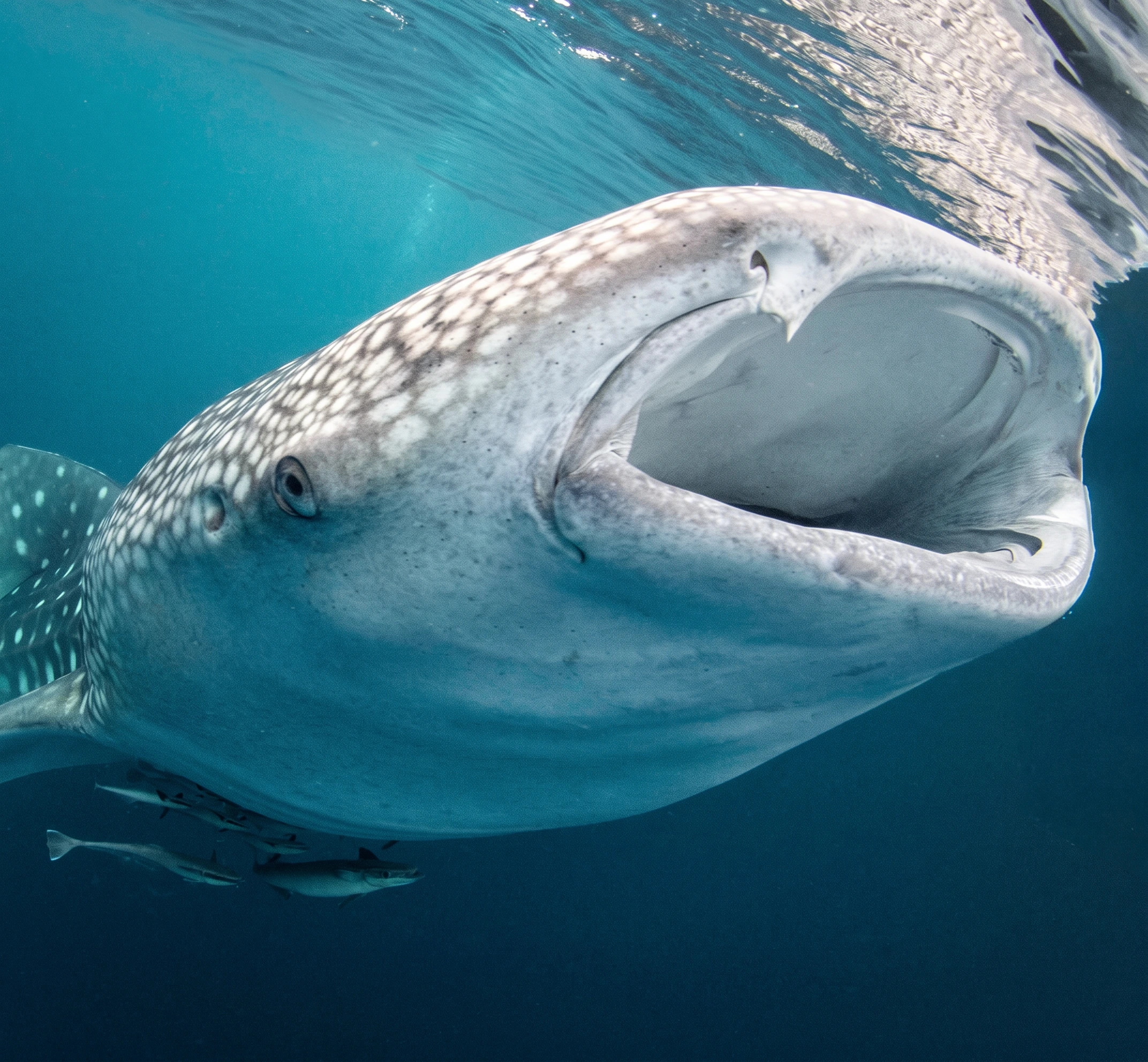
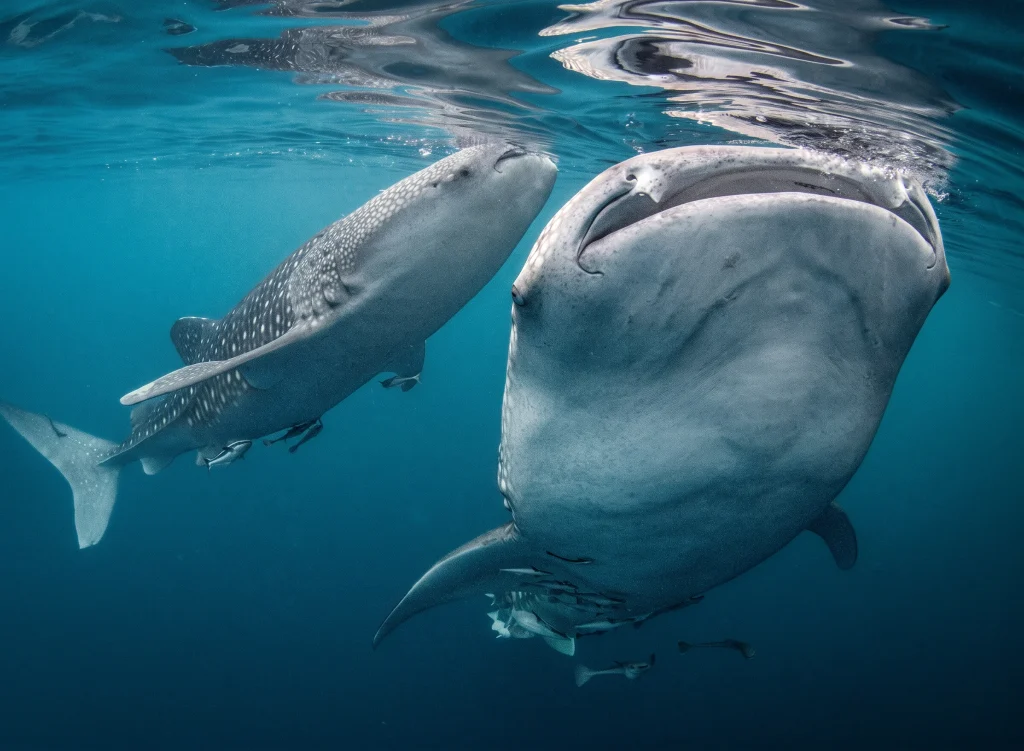
Dive sites may include Christmas Rock, Little Komodo, and Larry’s Heaven, known for their colorful soft corals, schooling fish, and resident critters. One of the region’s most distinctive experiences takes place around the bagans, traditional fishing platforms where whale sharks sometimes gather in the early morning. When present and conditions allow, guests may have opportunities to snorkel alongside the world’s largest fish.
Practical Information for diving in Triton Bay
- Water temperature: 27–29°C (81–84°F)
- Dive experience: Minimum Advanced Open Water certification (or equivalent) and 30 logged dives. Triton Bay is best suited to intermediate and advanced divers with good buoyancy control.
- Currents: Currents vary from gentle to strong, especially around points and straits.
- Wetsuit recommendation: 5 mm full wetsuit (the water is warm, but completing three dives a day, with an occasional fourth, can leave you chilled).
Rates & Dates
22 Oct – 01 Nov
- Fully Booked
Triton Bay
Kaimana to Sorong
Moments On Board
Where whale sharks meet soft corals
Frequently Asked Questions
Everything you need to know before setting sail
Where does a Triton Bay trip start and end?
Triton Bay is always sailed as part of a longer route. Trips run between Sorong and Kaimana via Raja Ampat, in both directions, or from Ambon to Kaimana via the Banda Sea. Check the available routes above for dates.
Which airports do I fly into?
Kaimana, Sorong and Ambon all have domestic airports, usually reached by connecting through a major Indonesian hub. Our reservations team can advise on the best connections for your route.
Will I see whale sharks on every trip?
Whale sharks visit the fishing platforms in Triton Bay regularly, but their presence depends on the fishermen’s catch and natural conditions, so sightings can never be guaranteed.
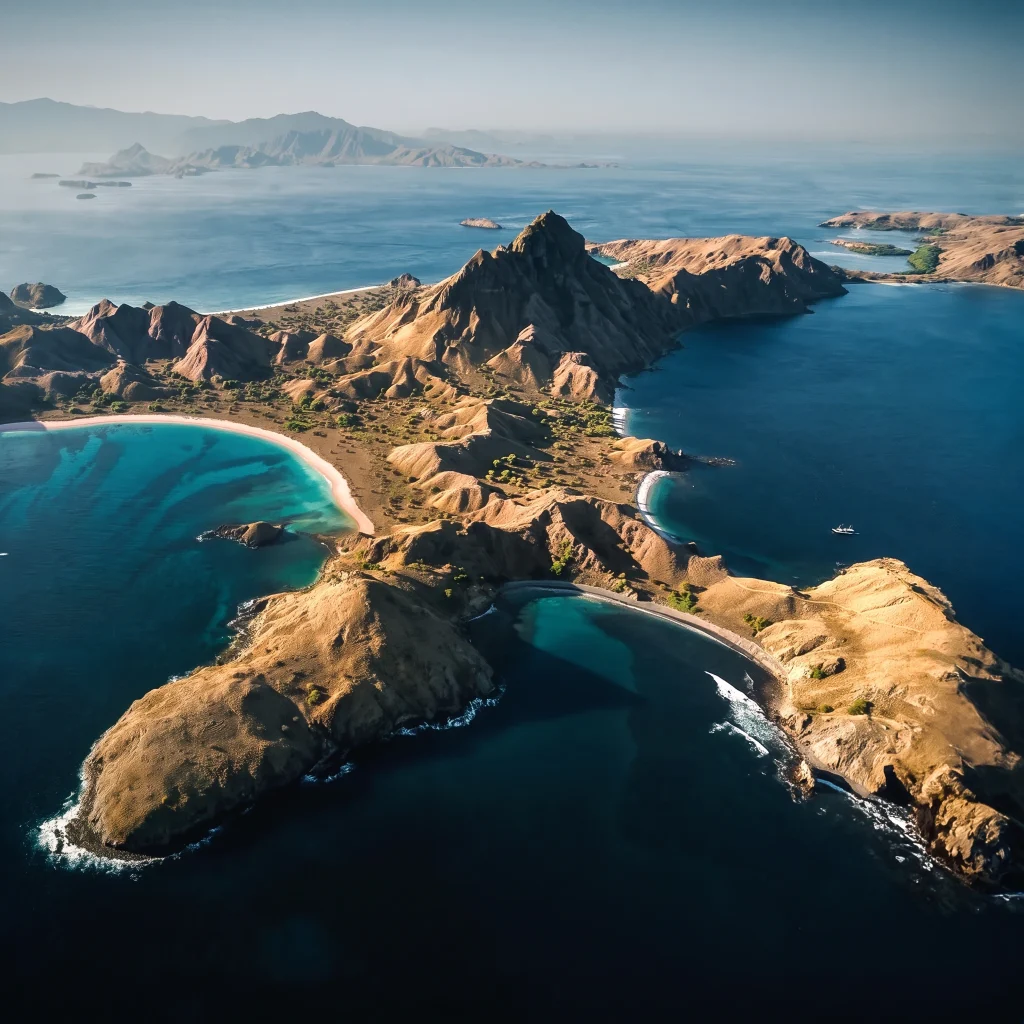
Komodo
May to September 2027
A UNESCO World Heritage national park where Komodo dragons roam dry savanna hills and strong currents feed manta rays, sharks and vivid reefs below.
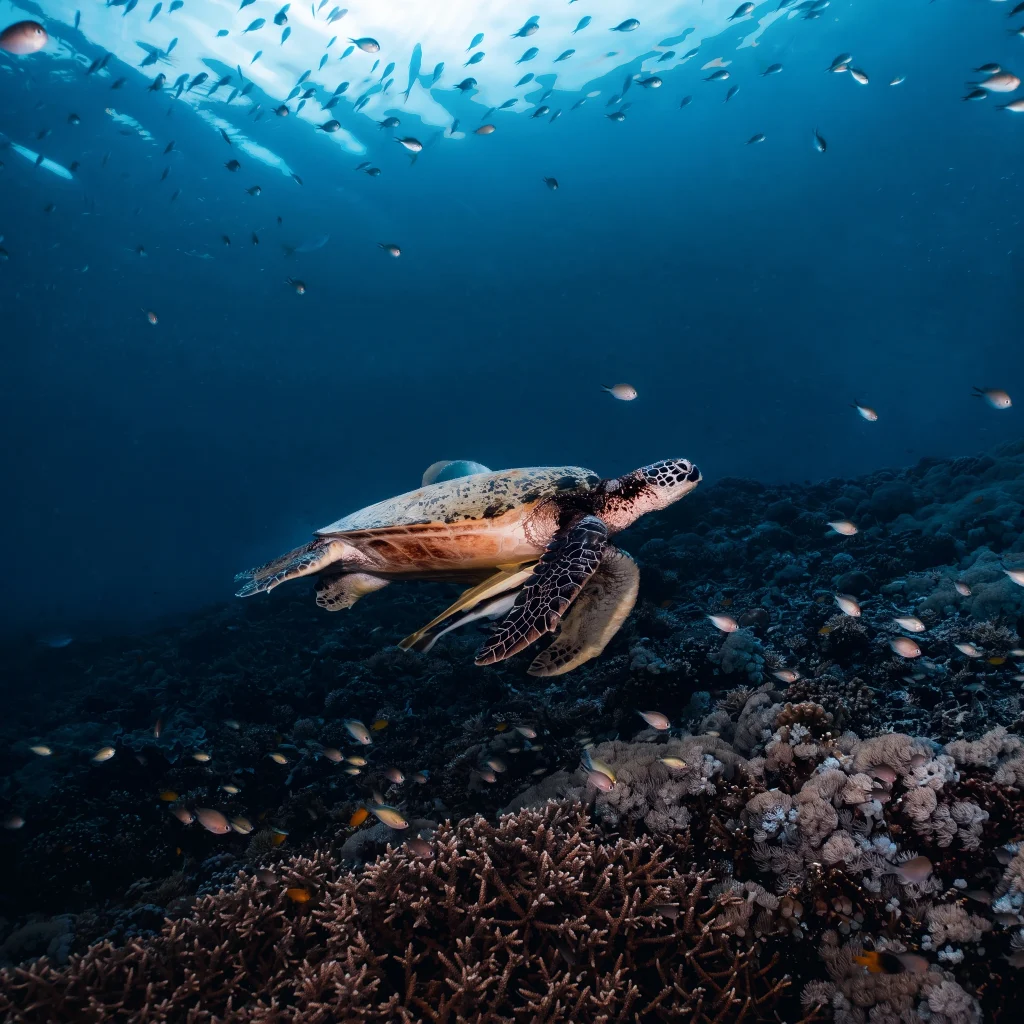
Halmahera
March and April 2027
A rarely sailed route between Raja Ampat and the North Moluccas, with quiet reefs, volcanic islands and the spice trade history of Ternate.